Guides
Part of Home Printmaking Guide: Which Processes Fit a Home Studio
Home printmaking: signal versus noise as of 2027
Home printmaking in 2027 means sorting genuine studio upgrades from market noise, then carving, proofing and drying a small edition on a press.
What to take away
- Home printmakingsignal versus noise as of 2027 starts with one test. The full definition is in the next section.
- Signal to watchwater-miscible inks, reusable gelatin plates, paper prices, shipping rules for solvents, and drain rules for cyanotype and anthotype.
- Named signalSpeedball Water-Soluble Block Printing Ink, Cranfield Caligo Safe Wash Relief Ink, Akua Intaglio Ink, Gelli Arts Gel Printing Plate, Gel Press Gel Plate, Jacquard Cyanotype Sensitizer Set, Stonehenge and Rives BFK papers.
- Read the manufacturer's SDS before the label, and treat your state or local wastewater authority or the EPA as the authority on what leaves your drain (in Canada, the provincial environment ministry).
- Proof on cheap paper. Print the edition only when the proof says the block is done.
- Record ink, paper, pressure and pull count every session. The notes are the asset, not the prints.
- Dry flat under light weight between clean interleaving, never in a stack.
What changed for 2027
Signal is a change that alters what you can buy, what you may pour away, or what a sheet costs. Noise is everything else: a rebranded brayer, a studio tour with good lighting, a cleaner you have no use for.
Reusable Gel Plate Prices
- Gelli Arts 8x10$25–$35
- Gel Press 8x10$20–$30
Water-Miscible Relief Inks Compared
Speedball Water-Soluble
- Cleanup
- Soap and water
- Base
- Water-based
- Size
- 1.25 oz tube
- Typical price
- $5–$8
- Origin
- —
Cranfield Caligo Safe Wash
- Cleanup
- Soap and water
- Base
- Water-based
- Size
- 75 ml tube
- Typical price
- $15–$22
- Origin
- United Kingdom
Akua Intaglio
- Cleanup
- Soap and water
- Base
- Soy-based
- Size
- 237 ml jar
- Typical price
- $25–$35
- Origin
- —
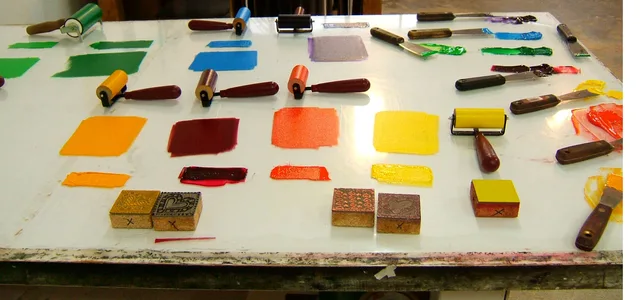
Water-based relief ink now dominates the retail shelf. Speedball Water-Soluble Block Printing Ink cleans with soap and water, and a 1.25 oz tube typically sells for $5 to $8. Cranfield Caligo Safe Wash Relief Ink, made in the United Kingdom, also cleans with soap and water; a 75 ml tube typically runs $15 to $22.
Akua Intaglio Ink is soy-based and cleans with soap and water; a 237 ml jar typically costs $25 to $35. A beginner's first tin is almost certainly water-miscible.
Reusable gelatin plates have settled into the supply chain rather than selling out each autumn. Gelli Arts Gel Printing Plate in 8x10 typically costs $25 to $35. Gel Press Gel Plate in 8x10 typically costs $20 to $30. Plate material changes what you can proof without a press.
Cyanotype and anthotype work has pulled more home printers into coating and washing. Jacquard Cyanotype Sensitizer Set typically costs $15 to $25. A Sunprint Kit typically costs $10 to $15. Those rinses can carry iron salts, so check your state or local wastewater authority or the EPA before pouring them down a drain (in Canada, the provincial environment ministry).
Paper supply is signal because it sets your per-sheet cost. Legion Paper Stonehenge, 250 gsm, 22x30 inches, typically runs $3 to $6 a sheet. Rives BFK, 250 gsm, 22x30 inches, typically runs $5 to $9. Arches 88, 300 gsm, 22x30 inches, typically runs $7 to $12. Pulp and freight costs move those numbers.
Shipping rules are signal if you buy solvent inks or cleaners. As of 2027, USPS Publication 52 restricts flammable liquids; many solvent inks cannot travel by air. UPS and FedEx ground service accept limited quantities with limited quantity marks. A new gouge handle is noise, not a reason to change your sharpening routine.
Before Saturday
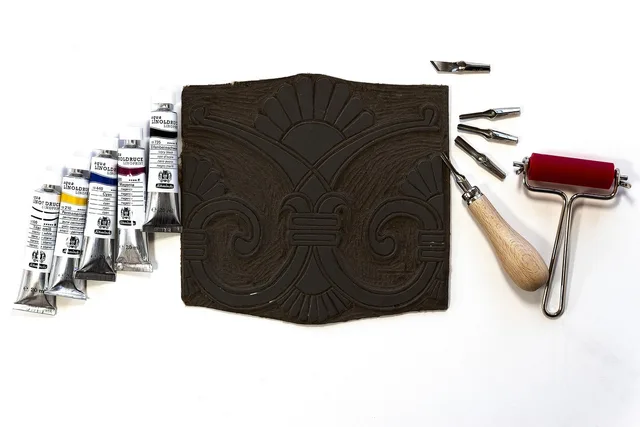
Decide the image during the week. Reduce it to two values, black and white, no gray, and trace it onto the block reversed.
Set up the wash point before the ink is open. Soap, running water and a clean towel within arm's reach, plus a lidded bin for inky rags. Workplace sanitation rules require washing facilities kept in a sanitary condition where people handle materials. A shared studio is held to that standard by its insurer and its landlord.
Saturday
Time / Task
- 9:00 to 10:00
- Set up, transfer the drawing, sharpen tools
- 10:00 to 13:00
- Carve the large areas, leave detail alone
- 14:00 to 15:00
- First proof, one pull, no edition paper
- 15:00 to 17:00
- Cut back where the proof shows filling or bald patches
- 17:00 to 17:30
- Second proof, then stop
Proof early. A block looks finished long before it prints well, and the first proof shows what the drawing hid.
Saturday Carving and Proofing Schedule
- 900–10 00 Set up, transfer drawing, sharpen tools
- 1000–13 00 Carve large areas, leave detail alone
- 1400–15 00 First proof, one pull, no edition paper
- 1500–17 00 Cut back where proof shows filling or bald patches
- 1700–17 30 Second proof, then stop
Sunday
Ink evenly, print ten sheets in a steady rhythm, and number nothing until they are dry. Change the paper before you change the pressure, because paper accounts for more of a bad print than force does. If prints come out patchy, roll a thinner film rather than pressing harder.
Dry flat between clean interleaving under light weight. At 50 percent relative humidity and 70 F, a 250 gsm sheet typically dries flat in 12 to 24 hours; above 60 percent humidity, allow two days.
The National Archives guidance on handling and housing paper records explains why folders and boxes are chosen for support rather than decoration. A damp sheet should never carry its own weight.
What to record
Write down the ink, the paper, the number of pulls, the pressure method, and the time of each proof. A weekend produces more information than prints, and the information is what makes the next weekend faster.
Keep the failures. A rejected proof with a note on why it failed teaches more than a good print with no notes. Our guide to single-skill projects turns those notes into exercises that isolate one variable at a time.
Cleaning up without wrecking the room
Scrape ink back into the tin before any solvent touches the slab. Wipe the brayer with vegetable oil, then wash with soap. Water-based ink needs only warm water, but do not pour a pigment-heavy rinse down a household drain in one go.
Put tools away sharp and dry. A gouge left wet rusts at the bevel, the part you cannot afford to lose. The starting point for a home practice sets out which processes suit a domestic room at all. It is worth rereading before a weekend becomes a habit.
For disposal, ventilation and exposure questions, follow the manufacturer's SDS and your state or local wastewater authority or the EPA (in Canada, the provincial environment ministry). For a splash in the eye or a suspected exposure, call US Poison Control at 1-800-222-1222 or a physician. Do not improvise.