Reviews
Part of 4 parts of printmaking inks and paper, explained
Printmaking inks and paper: what the experienced already know
A first order for ink and paper, how to use sample packs properly, and the label vocabulary that has a legal definition behind it rather than a marketing one.
What to take away
- One black, one transparent base and three papers is a complete first order.
- Sample packs are worth buying only if you test them systematically and keep the results.
- Some words on a label are defined in federal regulation. Others are invented by the seller.
- Buy the specification, not the description. Ask what you are actually being sold.
The first order
- One black relief or screen ink,in the vehicle you can clean up. Smallest tin sold.
- Transparent base,the same brand as the ink. It does more for your range than a second color.
- Three papers:one cheap proofing stock, one mid-weight printmaking sheet, one heavier sheet with different sizing.
- A pad of newsprintfor setting up and cleaning down.
That is enough to print for months and to learn what you actually prefer, which no catalog can tell you in advance.
Using sample packs properly
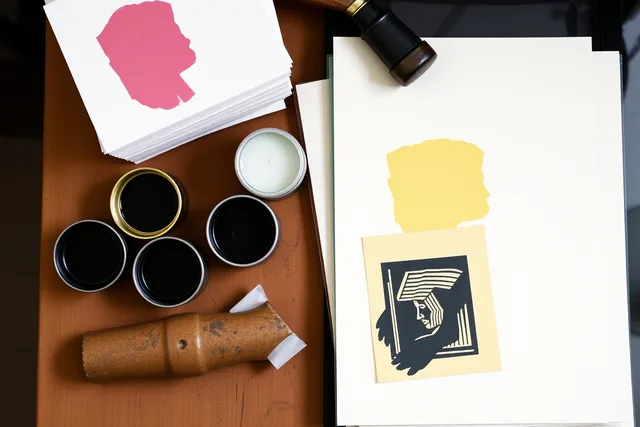
Sample packs are only useful with a method. Print the same block, with the same ink film, on every sheet, in one session. Label each on the back before you print. Then keep the whole set in a folder with the date. Running the same test sheet with water-based and oil-based inks shows how each behaves on your chosen paper.
An untested sample pack is a drawer of paper you will not recognize in a year. A tested one is a permanent reference, and it costs one afternoon.
Add a water drop test on each sample. Time how long it takes to soak in.
Sizing changes how a sheet behaves more than any other property. It is the least often stated clearly. A drop sitting a minute means the sheet holds a fine line. One vanishing in seconds means it drinks ink and spreads it.
Label words with definitions behind them
Some terms on art and household product labels come from federal regulation, not the packaging writer. The consumer product rules include a definitions section for the hazardous substances part, setting terms used across those requirements and adopting statutory definitions from the underlying act.
Those federal definitions decide which printmaking inks and solvents count as hazardous when you store them at home.
That is the difference between a warning phrase and a slogan. Non-toxic, eco and professional grade are not defined terms. Words that appear in a required hazard statement are.
| Word on the label | Status |
|---|---|
| Required hazard wording | Defined in regulation |
| Conformance statement for art materials | Required by the labeling rules |
| Artist grade, student grade | Manufacturer convention |
| Non-toxic, eco, natural | Marketing, unless qualified |
Buy the specification
Ask sellers what is in the product rather than what it is for. A pigment index, a fiber content, a gram weight and a sizing description are specifications. A mood is not.
Public bodies are precise about this because they have to be. The National Archives defines its products as tangible and discernible items it produces, including digital file-based output, before describing any of them. Knowing exactly what a deliverable is comes before deciding whether it is good.
Our review framework for inks and paper sets out which specifications actually differ, and our buying order for relief printing covers the tools that go alongside this first order.
Order proofing stock in quantity and everything else in the smallest unit sold. The pattern most beginners get backward is buying good paper generously and cheap paper sparingly.