Reviews
Part of Home Printmaking Guide: Which Processes Fit a Home Studio
Home printmaking: storing materials and prints
Home printmaking storage: caring for paper, enclosures, ink, blocks, tools, solvents, and finished prints in a household studio.
What to take away
- For home printmaking, paper wants flat, dark and stable. Temperature swings do more damage than dust.
- Enclosures are not interchangeable. Some papers and plastics stain the thing they are meant to protect.
- Solvents belong in small quantities, in closed and labeled containers, away from any ignition source.
- Ink skins from the top down. Level the surface, cover it, and close the tin hard.
Paper
Store full sheets flat, in the dark, in a drawer or a plan chest rather than rolled. A roll sets a curl that never fully leaves the sheet, and a curled sheet registers badly.
Keep the room stable rather than cold. Repeated cycles of damp and dry loosen sizing and cockle the edges, which shows up as uneven ink take-up months later. If the only available space is a closet on an outside wall, put the paper in a closed box and lift the box off the floor.
Interleave finished prints with a clean, unbuffered sheet if the work is a photographic process, and a buffered sheet if it is a relief or intaglio print on rag paper.
Enclosures, and why the test matters
Not every envelope is safe. The National Archives says photographic enclosures should pass the Photographic Activity Test defined in ANSI IT9.16, a test designed to reveal whether a storage material will cause fading or staining.
Polyethylene and polypropylene sleeves are common, the Archives notes, while older lab envelopes often are not safe for long storage.
For prints that are not photographic, the same logic applies in simpler form. Avoid glassine that has gone brittle, avoid anything with a strong smell, and avoid adhesive-sealed plastic sleeves.
Ink, blocks and tools
- Oil-based inklevel the surface with a palette knife, lay plastic film directly on it, then close the lid. Air is the enemy, not time.
- Water-based inkkeep the cap threads clean or it will dry shut.
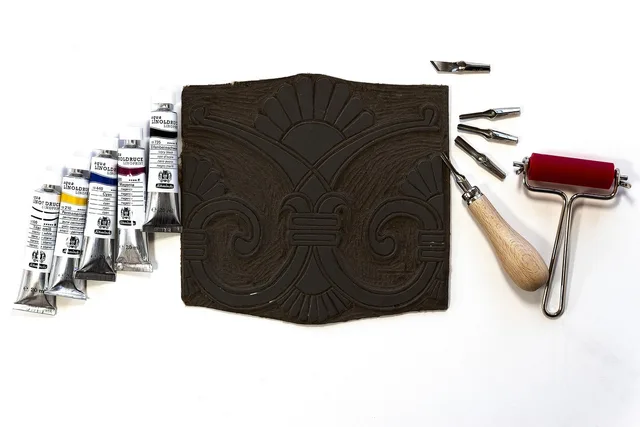
- Linoleum blocks: flat, away from heat, never against an exterior wall in winter. Cold linoleum cracks.
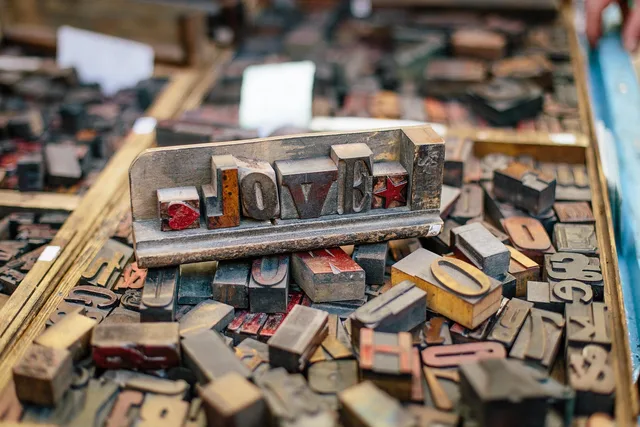
- Wood blocksflat, weighted, and interleaved so the printed face does not transfer.
- Toolsdry, oiled lightly, edges protected. A gouge rolled in a cloth stays sharper than one in a drawer.
Bench surfaces matter as much as containers, and our review of work surfaces for a print room covers which materials tolerate solvent and which quietly absorb it.
Solvents and rags
Keep the smallest quantity that supports your practice. OSHA's flammable liquids standard, 29 CFR 1910.106, sets out container types, closure and storage cabinet requirements for workplaces, and the principle behind them transfers cleanly to a house: original containers, closed, labeled, cool, and never decanted into a drink bottle.
Oily rags are a domestic hazard: linseed oil generates heat as it cures. Spread flat to dry outdoors, or store in a sealed metal container until disposal. Never leave a bundle in a bin overnight.
Our starting point for home printmaking explains which processes are worth keeping in a house at all, the first decision that limits what you have to store.
Check the store at the change of seasons rather than on a fixed date. Damp arrives with the weather, and the two visits worth making are the first cold week and the first humid one.