Guides
Part of 4 parts of printmaking inks and paper, explained
Printmaking inks and paper: setting up a bench that works
Arranging the slab, the mixing area and the paper station so ink and paper stay usable, plus the one cleaner class worth designing out of a home studio.
What to take away
- Give ink and paper separate stations that never swap. Most contamination is a layout problem.
- Mix on glass with a knife, not on the slab you roll from. Keep mixing and rolling apart.
- Condition paper the day before rather than the morning of a session.
- Print your reference sheets and keep them at the bench. A screen you have to wake and sign into is a reference you will not check.
Three stations
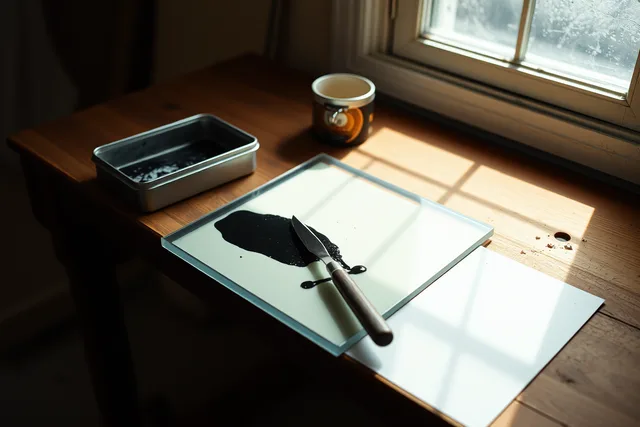
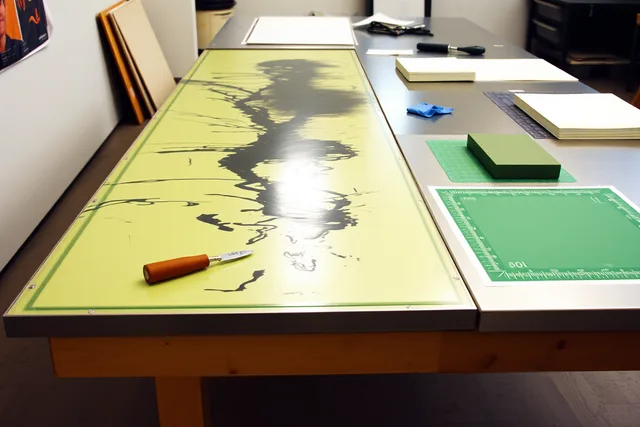
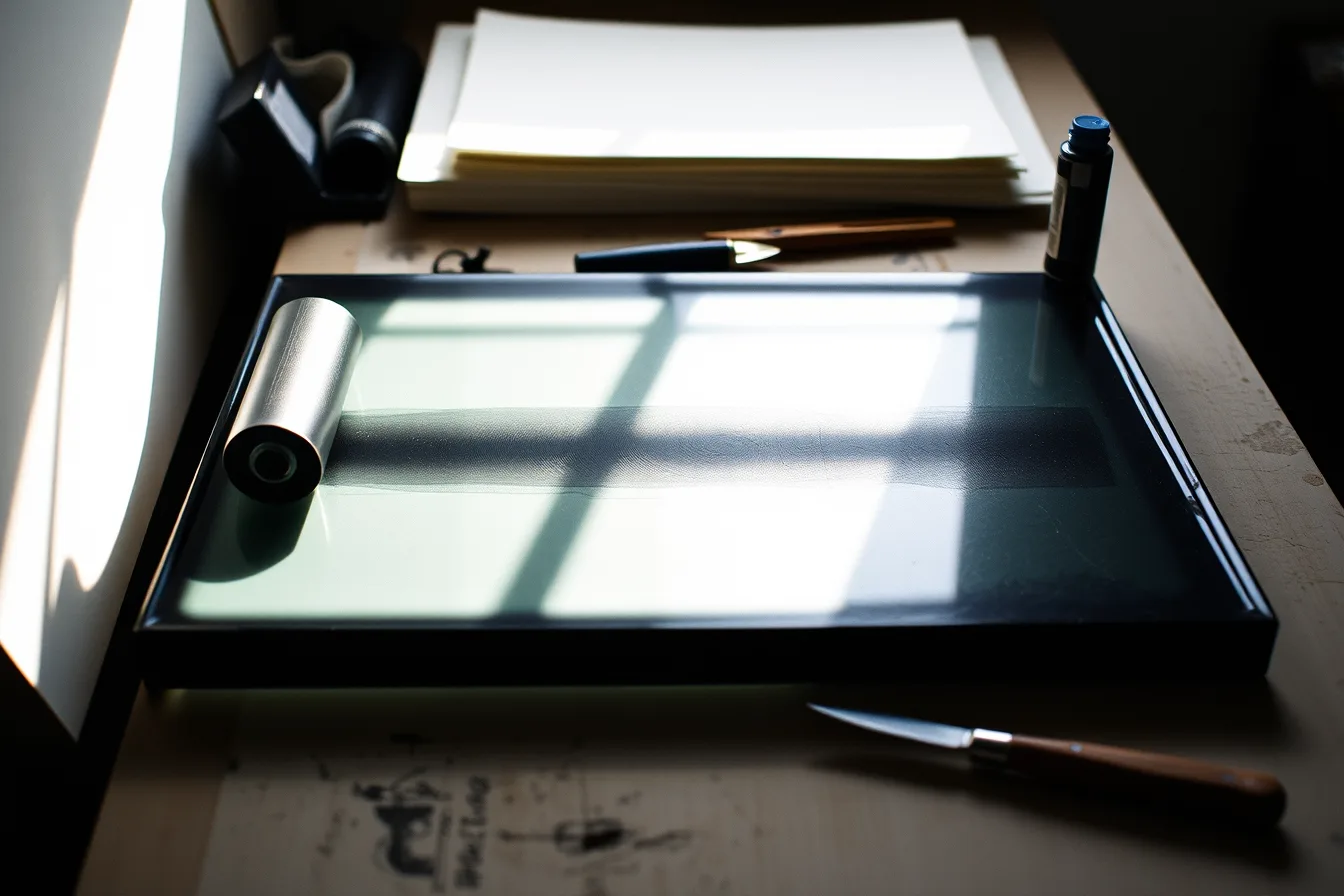
The slab. Glass or acrylic, larger than your brayer travel, lit from the side so you can see film thickness. Nothing else lives on it.
The mixing area. A separate glass plate, two palette knives and a scale. Mixing on the rolling slab means every color is contaminated by the last one.
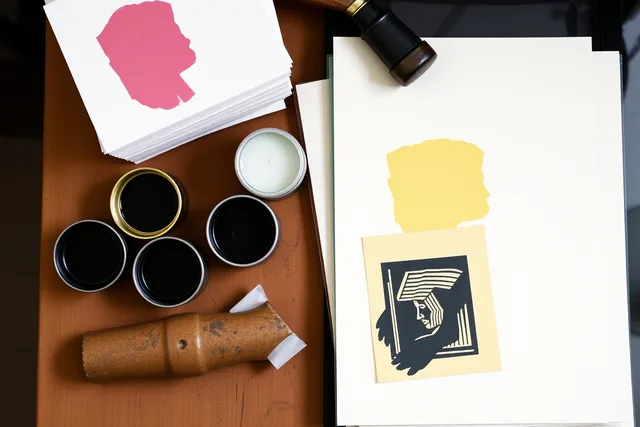
The paper station. Dry, clean, wiped before use, with the stack squared and covered. It is the surface where nothing wet is ever allowed.
Three stations sounds like a lot of bench until you count how many faults come from combining them. Ghosting, contamination, fingerprints and spoiled sheets are almost all layout problems wearing a technique costume.
Conditioning paper
Paper responds to the room over hours, not minutes. Bring sheets out the day before, interleave them, and leave them flat under light board in the room you will print in.
For dampening, a shallow tray and a stack between damp blotters works better than spraying. Damp the sheets the evening before, keep them stacked under weight overnight, and they equalize. Sheets damped in a rush are damp in patches, which prints as patches.
Keep a hygrometer at the paper station. If the room is at one humidity in January and another in July, your dampening routine has to change with it and the log tells you by how much.
Keep the reference sheets on paper
Pin the ink mixing grid, the ratio ladder and the paper test sheet where you stand. Digital references lose to physical ones at a bench, because a screen with inky hands is not a reference at all.
The National Archives makes the same point about emergency information in its records emergency toolkit, which advises planning for having no internet access and printing the basic information out to keep it accessible. A studio version is smaller and just as useful.
The cleaner class to design out
Some strippers and aggressive cleaners contain methylene chloride, which carries its own federal occupational standard establishing requirements to control exposure to it. It is a substance treated as serious enough for a dedicated rule, and there is no reason for it to appear on a domestic printmaking bench.
Design it out at the setup stage. Choose an ink family whose cleanup route is vegetable oil and soap, or water, and the strongest thing on your bench becomes washing-up liquid. That single decision removes ventilation, storage and disposal questions in one move.
Our review framework for inks and paper explains how the vehicle choice drives that cleanup route, and our review of work surfaces for a print room covers the materials each of these three stations should be built from.
Reset the three stations at the end of a session rather than the start of the next one. Setting up on a bench somebody left dirty, usually you, is where most avoidable contamination in a home studio comes from.