Industry
Part of A quarterly watchlist of six items for member run print studios
Independent print studios: what to settle before you sign
Before you sign, join or take a commission at independent print studios: who owns the work, the admin hours, membership terms and renewal deadlines.
Shared and independent print studios run on unwritten rules: who owns a print, who does the admin, what a membership really commits you to, and which renewals fall due. Settle those before you sign, join or take a commission.
What to take away
- Put ownership and reproduction rights in a signed writing before production. A verbal understanding is not enough for a copyright transfer.
- The admin is the job. Budget hours for it or it eats the hours you meant to print in.
- Read the membership terms for what happens when you leave, not for what happens when you join.
- Put registrations, insurance, lease dates, and recurring contracts on a shared renewal calendar.
Who owns what gets printed
The most common regret is ambiguity about ownership. A studio prints a commission, a member helps, an intern assists, and nobody wrote anything down.
Who owns the print?
Is it a commission?
employer or client is author
author or joint authors own
Where ownership starts is settled law. Under the US Copyright Act, 17 U.S.C. §201, copyright in a work vests initially in the author or authors. Joint authors are co-owners. A work made for hire treats the employer or the commissioning party as the author, but only in the two situations the Act recognizes: a work prepared by an employee within the scope of employment, or a specially ordered or commissioned work that falls in a listed category and is covered by a signed written agreement.
Transfers of ownership have their own requirements: 17 U.S.C. §204 makes a transfer of copyright valid only if it is in writing and signed by the owner of the rights being conveyed.
Use a written agreement before the session. A starting point is: “The maker retains copyright in the artwork. The studio may display images of the finished print to promote the studio, but may not reproduce or license the image without the maker’s written permission. The client receives [the physical print or specified rights]. Any copyright transfer must be stated in a writing signed by the rights owner.” Adapt the terms to the job and have the parties sign.
Selling a print sells the print only, not the right to reproduce the image, and a client who assumes otherwise discovers it at the worst moment. State this plainly on the invoice to avoid later arguments.
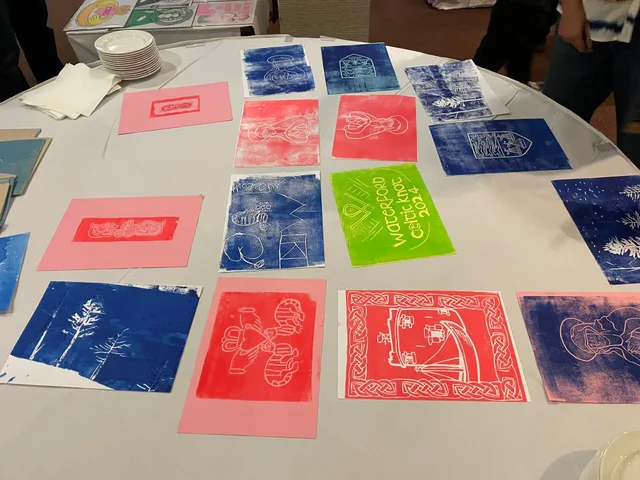
Studios selling editions, cyanotype editions included, should spell out the numbering rules in writing: how many prints the edition holds, what marks an artist's proof, and what the buyer is entitled to.
The admin nobody warns you about
Unpaid admin hours
- Bookkeeping
- Membership renewals
- Insurance questions
- Waste paperwork
- Equipment logs
- Key handovers
- Group chat
Two things help. Put admin in the calendar as a fixed weekly block rather than doing it when it becomes urgent. And write down every recurring task with its interval the first time you do it, so the second person to hold the role inherits a list instead of a mystery.
Membership terms worth reading twice
- What notice period applies, and does it run from the month end?
- What happens to work and materials left in storage?
- Who is liable if shared equipment is damaged during your booking?
- Is bench time transferable, and does it expire?
- Which processes are excluded, and who decides?
The exclusion list is the most informative clause in most agreements, because it tells you what the studio has decided it cannot support safely.
Renewals have deadlines
Renewals depend on what the studio has registered and where it operates. Check whether it has a state business-entity filing or assumed-name registration, a sales-tax permit, or a city or county business license, then record any reporting and renewal dates. Confirm requirements with the relevant state's Secretary of State, state department of revenue, and city or county licensing office. If the studio owns a trademark, the US Patent and Trademark Office's trademark maintenance guidance covers a Section 8 declaration of continued use and a Section 9 renewal application through the USPTO's trademark filing system.
Keep one calendar for the studio with every renewal and recurring review on it: insurance, lease dates, registrations, waste contracts, and electrical-equipment checks required by the lease, insurer, or applicable local rules. Assign one owner and review the calendar at a fixed point each month. Put reminders ahead of deadlines, not on them.
Where to start if you are joining one
Visit twice, once during a busy session. Before signing, ask for the membership agreement, house rules, fee schedule, process restrictions, and maintenance log; confirm that the written terms match what you were told about access, storage, guests, and leaving. Our watchlist for independent studios offers additional criteria, and the layout advice from makers is supplementary reading on how a room works in practice.
Ask a leaving member why they are going. Given honestly, that answer tells you more about how a studio runs than any tour, and departing members are usually willing to give it.