Reviews
Part of Tracking what a member-run print studio needs heading into 2027
How to choose materials for an independent print studio: the short version
Buying consumables for a shared studio, reading the labels that carry legal weight, and the second-hand furniture question nobody thinks to ask about.
What to take away
- A shared studio should standardize on fewer materials than a solo printer would. Variety multiplies risk.
- Some product labels carry specific federal warnings. Learn which words are regulated and which are marketing.
- Solvents containing named aromatic compounds are treated differently from a general purpose cleaner.
- Second-hand painted furniture and equipment can carry lead paint. Check before sanding anything.
Standardize, then stock
A solo printer can keep six inks and four papers. A studio with fifteen members should not, because every extra product is another safety data sheet, another storage decision and another cross-contamination path.
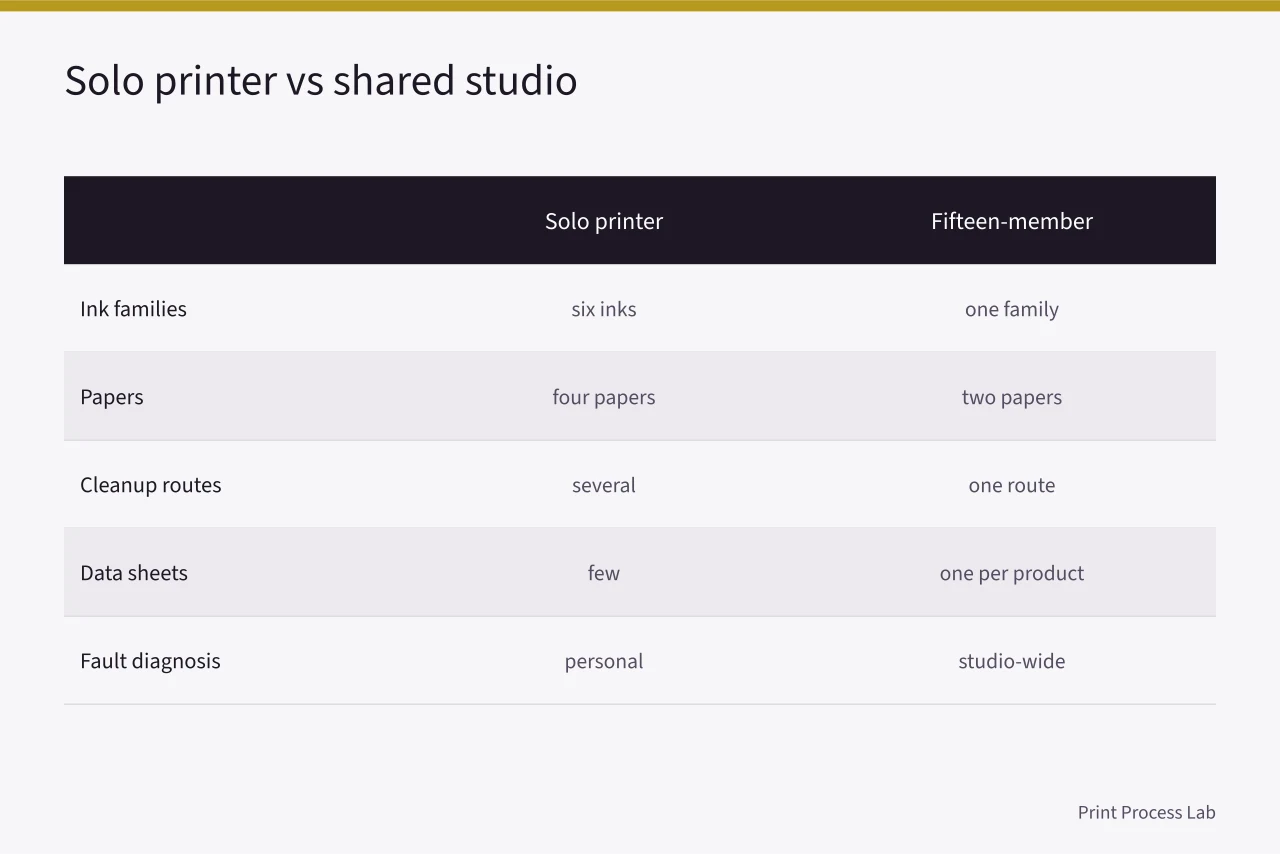
Pick one relief ink family, one screen ink family, two papers and one cleanup route, and buy those in quantity. Members who want something else can bring it, subject to a rule that anything brought in comes with its data sheet and leaves with its owner.
Standardizing also makes faults legible. When fifteen people print with the same ink on the same paper, a problem that appears across several of them is a studio problem worth investigating. When everyone uses something different, the same evidence looks like fifteen unrelated bad days.
Labels that carry legal weight
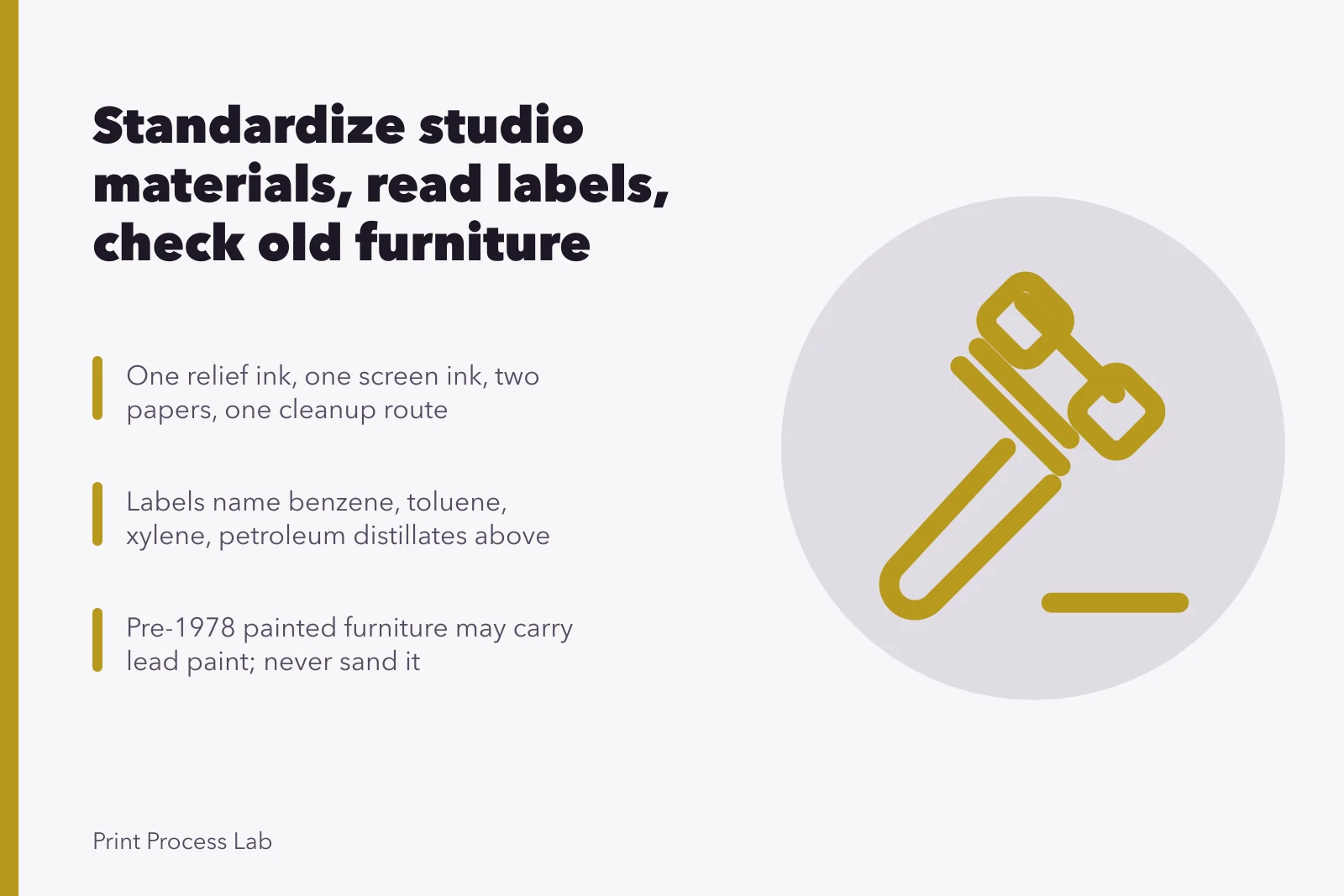
Household and art products sold in the United States carry warnings under rules that specify wording rather than leaving it to the manufacturer. The list of products requiring special labeling names specific substances and thresholds, including products containing benzene above a stated percentage and products containing toluene, xylene or petroleum distillates above stated percentages.
A warning label does not automatically mean unsafe, but it does tell you exactly what the product contains. A cleaner marketed only as citrus may not.
Cleanup comes down to the ink itself, and water-based versus oil-based printmaking ink changes what a studio stores and vents.
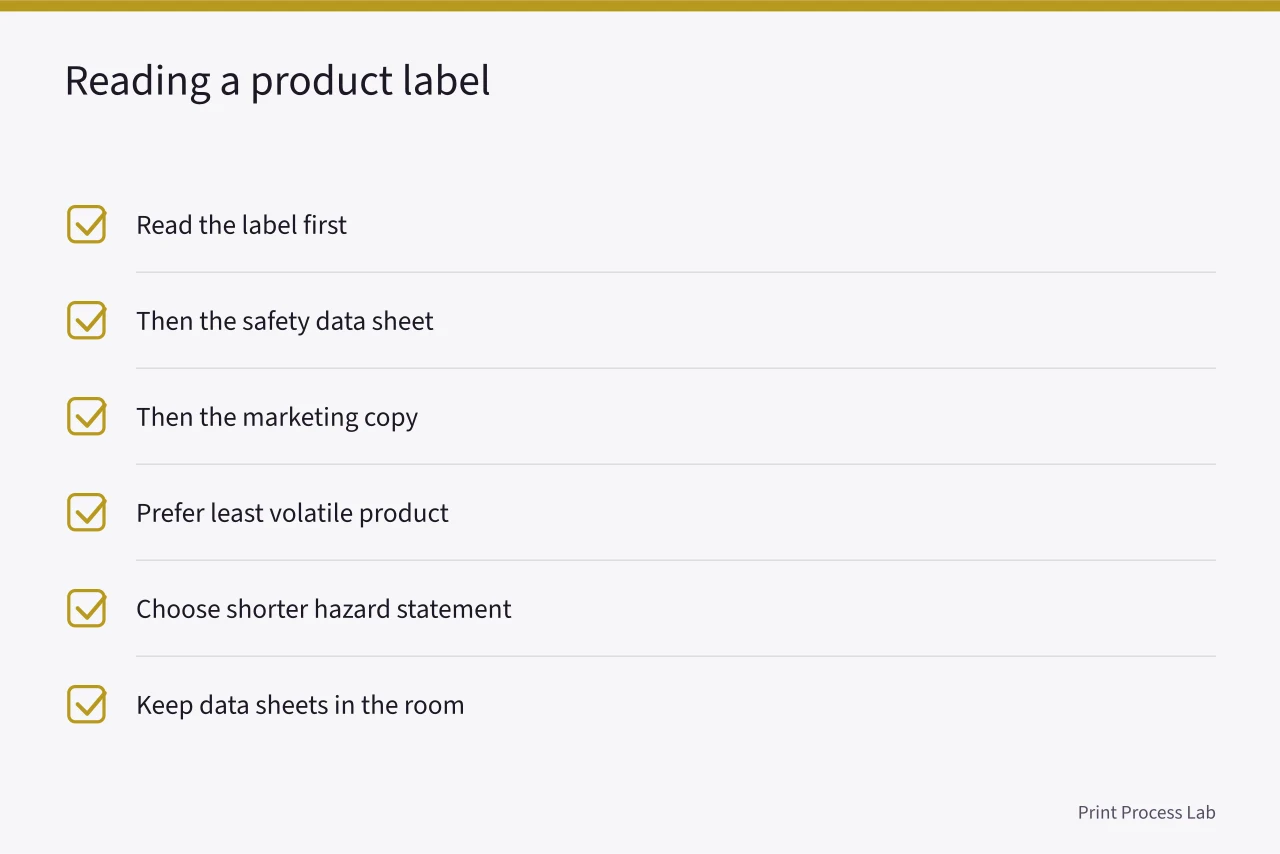
- Read the label first, then the data sheet, then the marketing copy.
- Prefer the least volatile product that does the job.
- Where two products perform the same, choose the one with the shorter hazard statement.
- Keep the data sheet folder in the room, not on someone's laptop.
The second-hand furniture question
Studios furnish themselves from what they can find, and painted timber from before the modern rules can carry lead paint. The Consumer Product Safety Commission's ban on lead-containing paint and certain consumer products bearing it was made in the late nineteen seventies, so anything older than that is worth treating with caution.
The rule for a studio is simple: do not sand, scrape or heat old painted surfaces. Clean them, seal them, or replace them. A plan chest with intact old paint is fine. The same chest being stripped in a corner of a shared room is not.
Stock control that works
Keep a single shelf list with product, size, supplier and the date the last one was opened. Assign one person to it. Count the shelf once a quarter rather than trusting the list. Studios run out of the one thing everybody assumed somebody else had ordered.
Our studio watchlist puts that review on a schedule. Our guide to choosing the materials a print room is built from covers the surfaces, seals and containers those consumables sit on.
Write the standard list on the wall next to the shelf. Members buy what they can see named, and an unwritten standard erodes within a term as people substitute whatever the nearest shop had.
Common questions
Should members bring their own ink? They can, with a data sheet and their name on it. Communal ink should be studio-bought.
Is water-based always safer? Usually simpler to clean up and to dispose of, which is most of the practical benefit. Read the sheet regardless.
How much stock is too much? More than a quarter of usage for anything with a shelf life, and more than a year for anything else.
Who checks the data sheet folder? One named person, once a quarter, against the shelf list.