Maintenance
Part of Tracking what a member-run print studio needs heading into 2027
Beginners lose money by rushing into a shared print studio unprepared
Independent print studio mistakes made before you join one: the assumptions that cost beginners money when they move from a home room into a shared studio.
What to take away
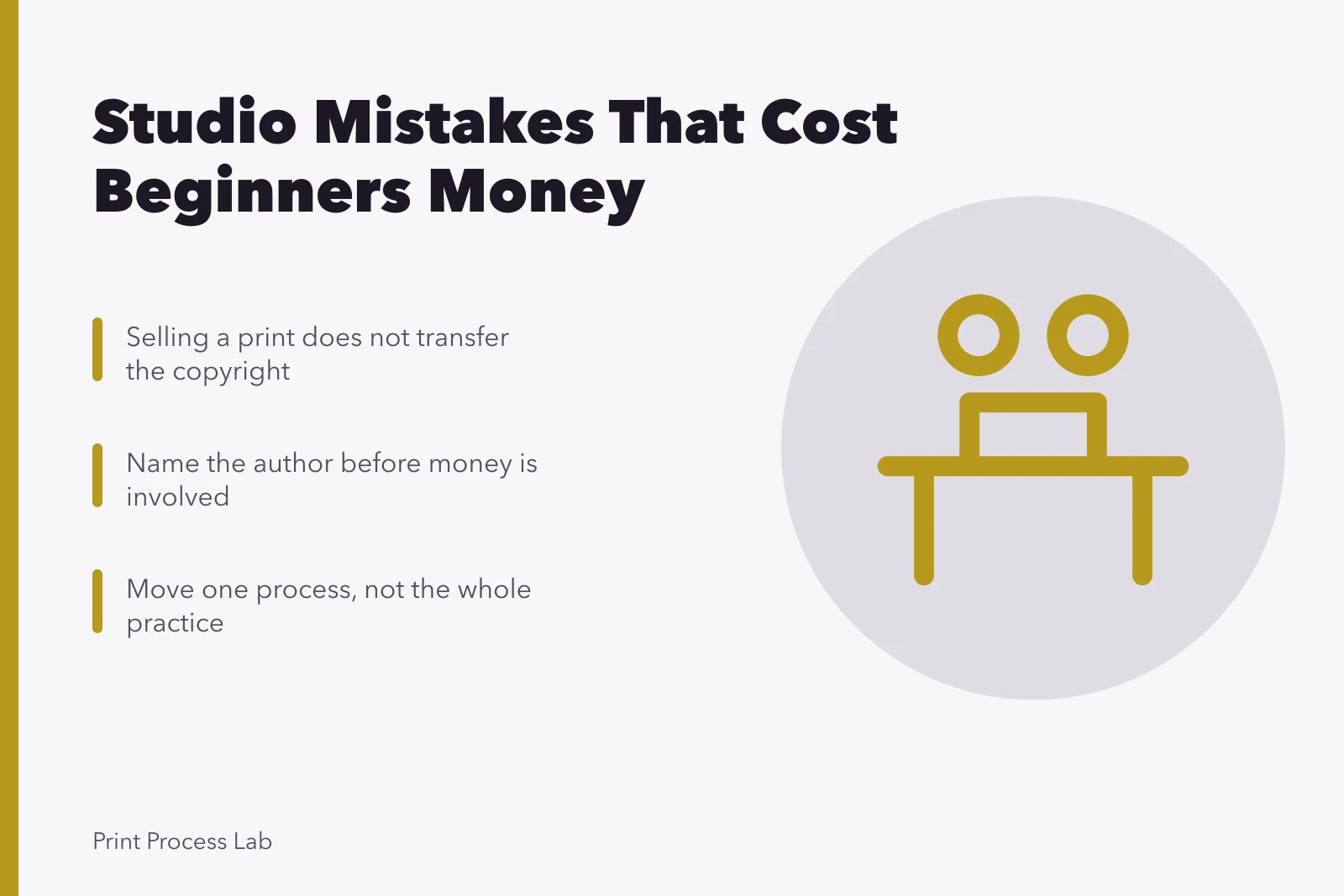
- Selling a print does not transfer the copyright in the image. That is the single most expensive assumption in this field.
- Naming an author correctly matters before money is involved, not after.
- Do not move a whole home practice into a studio at once. Move one process and see what breaks.
- Shared equipment is not free equipment. Budget for the wear you cause.
Assuming a sale transfers the rights
The most common and most costly mistake is believing that a buyer of a print acquires the right to reproduce it. The statute says the opposite in plain terms: ownership of a copyright is distinct from ownership of the material object in which the work is embodied.
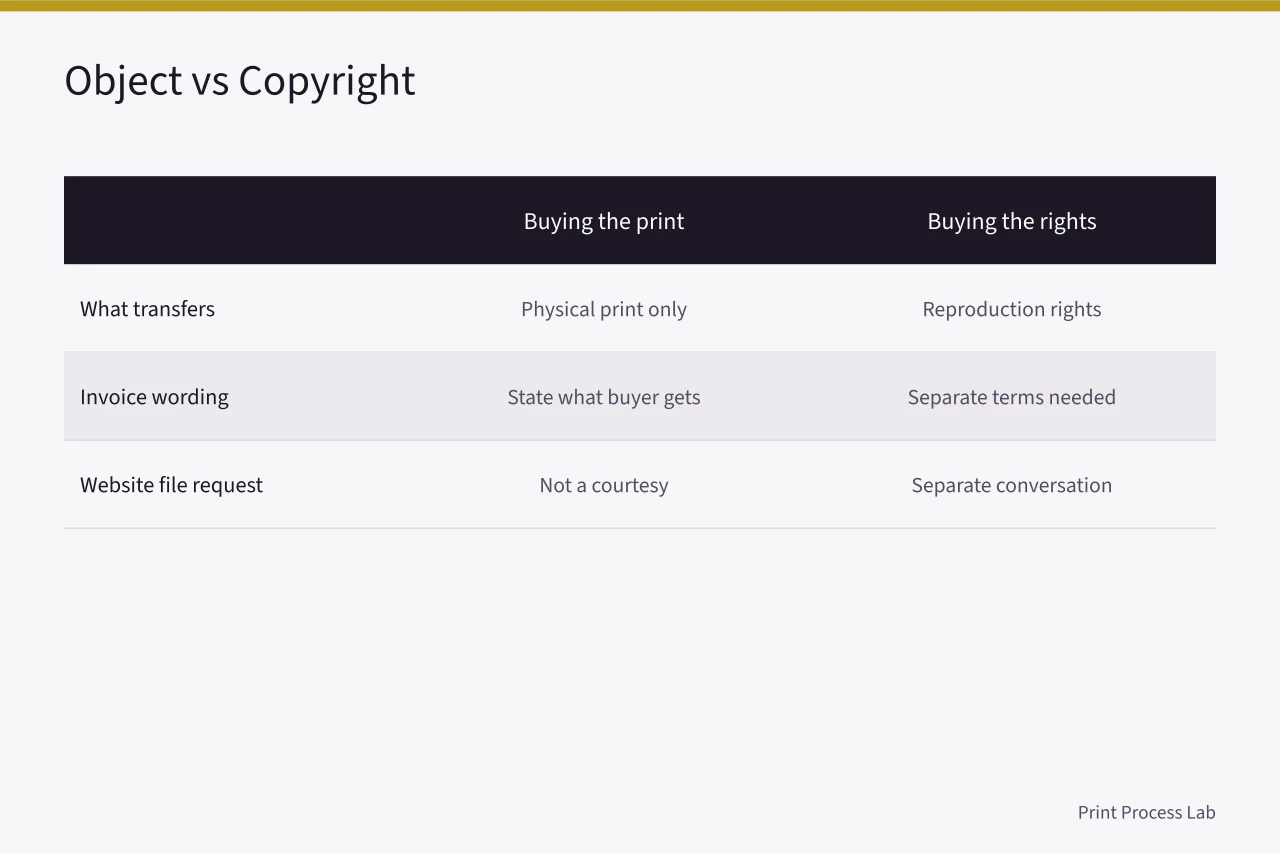
Transferring the object does not of itself convey any rights in the work.
Two things follow. Say what the buyer is getting on the invoice, in one sentence. And when a client asks for a file for their website, treat that as a separate conversation with its own terms, not as a courtesy.
Getting the author wrong
Studios collaborate, and collaboration muddles authorship. The Copyright Office sets out how to identify the author and the copyright owner when registering, including the works made for hire situation where the employer or commissioning party is treated as the author under conditions the law specifies.
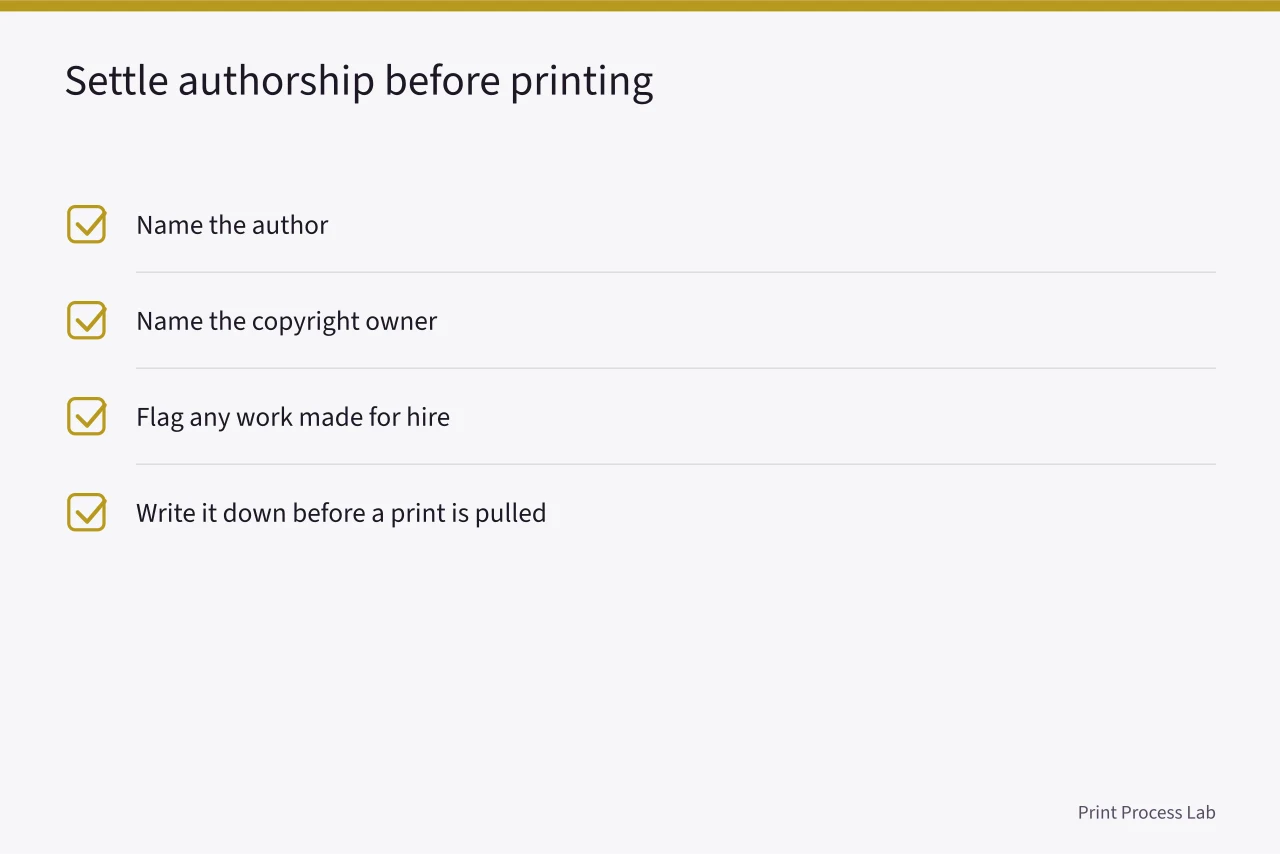
Sort this out in advance. Who is the author, who is the owner, and is anything a work made for hire. Write it down before a print is pulled, because after a sale it becomes a negotiation.
Moving everything at once
Beginners join a studio and try to relocate their whole practice in a week. The result is a fortnight of hunting for tools and a lot of paid bench time spent unpacking.
Move one process. Print with it for a month. Then decide what else follows. Some things stay at home permanently, and discovering that early saves both rent and frustration.
Underestimating shared equipment costs
| Assumption | Reality |
|---|---|
| The press is included | Blankets and packing wear, and someone pays |
| Someone maintains it | Someone means a named person on a schedule |
| Bench time is the whole cost | Materials, storage and travel usually exceed it |
| Damage is covered | Check the membership terms, not the notice board |
Read the membership agreement for the clause about damage during your booking. That is the paragraph that decides whether a bad afternoon costs you a print or a roller.
Bringing home habits that do not transfer
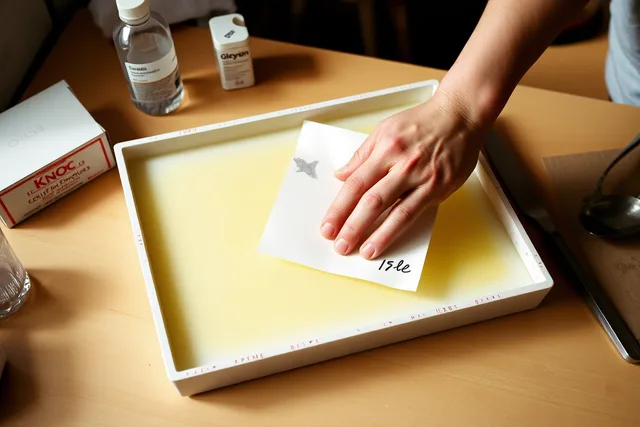
A home printer improvises: a kitchen tray, an unlabeled bottle, a rag on the radiator. All three are fine alone and unacceptable in a shared room, because the risk lands on somebody who did not choose it.
Adopt the studio's labeling and waste rules on day one. Our starting kit for a shared studio lists the documents those rules live in, and our piece on how independent makers build a body of work covers the practice side of the same move.
Ask what happened the last time something went wrong. A studio that can describe an incident and what changed afterward is running itself. One that says nothing has ever happened is not paying attention.
Common questions
Can I sell a print and license the image separately? Yes, and that is normally the right structure. Two things, two prices, two sentences on the invoice.
Is a handshake enough between friends? It is until it is not. A short written note costs nothing and protects the friendship.
Should I register everything I make? No. Registration is a decision about enforcement, taken for work that matters commercially.
What if a studio claims rights in member work? Read that clause carefully before joining, and ask what it is for. Some claims are reasonable and narrow; broad ones are not.