Industry
Part of 4 parts of printmaking inks and paper, explained
4 things worth knowing about printmaking inks and paper
Printmaking inks and paper: how working printers settle on a house palette and a standard paper, and what changes once the same images start appearing on functional.
What to take away
- Working printers narrow, they do not broaden. A house palette of four or five inks does more than a drawer of twenty.
- One standard paper plus one alternative covers most of a practice.
- Printing an image onto a functional object engages the same exclusive rights as printing it on paper.
- Trademarks, patents and copyright do different jobs, and makers who sell often need only one of them.
The house palette
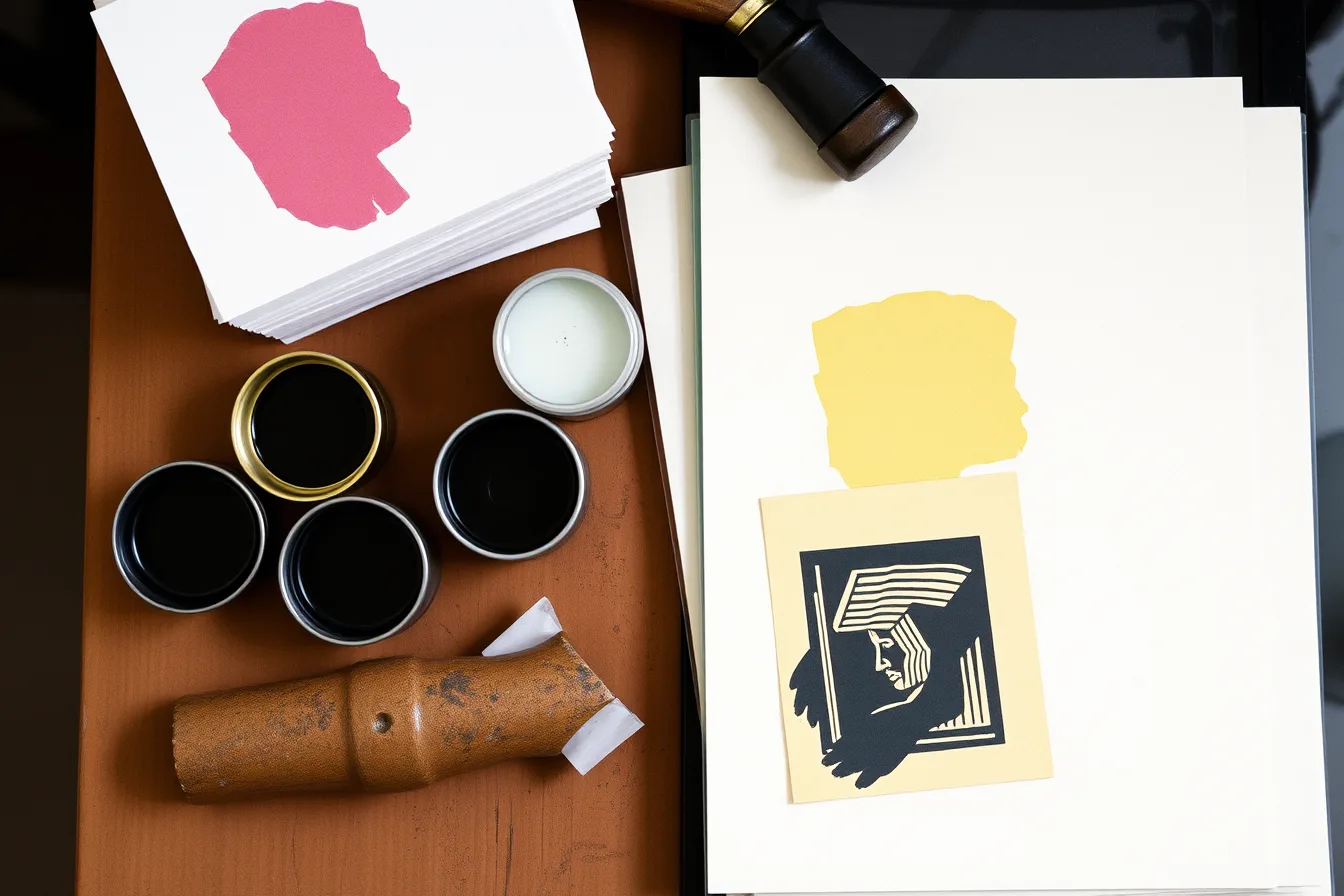
Ask an established relief or screen printer what they use and the answer is usually short: a black, two or three chromatic inks chosen because they mix predictably, a white, and transparent base. That set produces a recognizable body of work precisely because it is limited.
House Palette Setup
- Black ink
- Two or three chromatic inks
- White ink
- Transparent base
- Written ratio sheet
- Pair grid at three ratios
The reasoning is practical rather than aesthetic. A small palette means every mix has been made before, every ratio is written down, and a color can be matched a year later. A large palette means every print is a fresh experiment. A written ratio sheet is the same record keeping that keeps a shared studio's consumables budget honest.
Choose the palette by mixing rather than by swatch. Two inks that look ideal separately can produce a dead mixture, and you will not discover that from a catalog.
Test the palette against itself before committing. Print a grid of every pair at three ratios on your standard paper, pin it above the bench, and keep it. That single sheet replaces most of the guessing that happens at the slab, and it is the reference experienced printers reach for most often.
One standard paper
The same logic applies to paper. Pick one sheet you know well, and one alternative with a different absorbency for the times the standard does not suit.
Standard vs Alternative Paper
Standard sheet
- Absorbency
- Known
- Heavy ink film
- Known
- Damp behavior
- Known
- Drying
- Known
- Tearing
- Known
- Aging
- Known
- Buying
- In quantity
Alternative sheet
- Absorbency
- Different
- Heavy ink film
- Unknown
- Damp behavior
- Unknown
- Drying
- Unknown
- Tearing
- Unknown
- Aging
- Unknown
- Buying
- Small packs
Knowing a paper means knowing how it takes a heavy ink film, how it behaves damp, how it dries, how it tears and how it ages. That knowledge does not transfer between papers, which is why switching constantly keeps a practice permanently at the beginner stage. Buy the standard sheet in quantity and the alternative in small packs.
When the image moves onto objects
Many independent makers print onto tote bags, tea towels, cards and packaging. Changing the substrate does not change the rights position.
The statute addressing pictorial, graphic and sculptural works in useful articles confirms the exclusive right in such a work includes reproducing it in or on any kind of article, useful or otherwise, subject to the section's limits.
The practical consequences are two. Somebody else's design on a product is the same problem as somebody else's design on a print. And your own design on a product is still your work, which is worth stating in writing when a shop asks for artwork files.
Which right does what
Makers who start selling often assume they need everything. They usually do not. The patent and trademark office sets out the difference between trademarks, patents and copyright plainly: they are different types of intellectual property protecting different things.
For most printmakers, copyright covers the images and a trademark, if anything, covers the studio name. Patents are rarely relevant to printmaking practice at all.
Our review framework for inks and papers covers how to choose the materials behind that practice, and our account of how independent makers work with cyanotype covers the same questions for a photographic process.
Keep one tin of each palette ink unopened as a reference. Formulations change, and a sealed sample is what lets you tell a reformulated product from a change in your own technique.