Reviews
Part of The cyanotype process: chemistry and safety rules
Sequence your cyanotype purchases so the essentials come first
The buying order for a first cyanotype setup, why premixed chemistry beats raw powders at the start, and the equipment not to buy at any stage.
What to take away
- Buy premixed solutions for the first year. Handling raw powders adds a dust hazard for no benefit.
- Unbuffered paper is the single purchase that decides whether the process works at all.
- Buy protective equipment in the same order as the chemistry, not afterward.
- Do not buy a sprayer. Spray application changes the ventilation question completely.
The first purchases, in order
- Premixed sensitizer,or a kit of two solutions ready to combine. Smallest size available.
- Unbuffered paper.Watercolor or printmaking paper without an alkaline buffer, well sized.
- Nitrile gloves and sealed eye protection.
- A contact frame or a sheet of glasswith a backing board and clips.
- Two trayslarger than your paper, dedicated to this process only.
- A coating rod or a soft synthetic brushwithout a metal ferrule that touches the solution.
That set makes prints. A UV lamp, a vacuum frame and a drying rack all come later.
First cyanotype purchases in order
- Premixed sensitizer or two-part kit
- Unbuffered watercolor or printmaking paper
- Nitrile gloves and sealed eye protection
- Contact frame or glass with backing
- Two dedicated trays larger than paper
- Coating rod or soft synthetic brush
Why premixed first
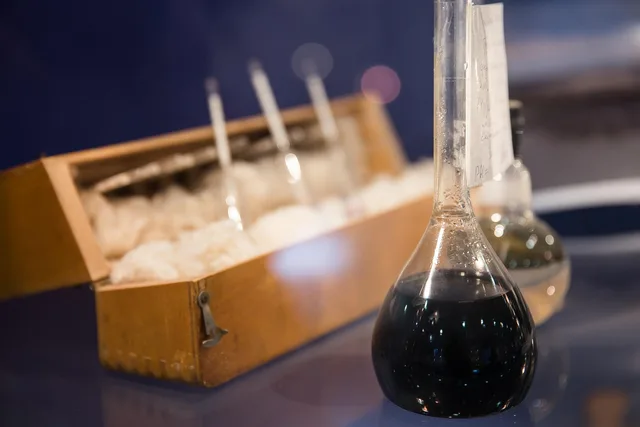
Weighing dry ferricyanide and iron salts creates dust, and dust is the one route into your lungs that gloves do not close. Premixed solutions remove that entirely, cost slightly more per print, and let you learn coating and exposure before you learn weighing.
When you do move to powders, the equipment changes: a dedicated scale, a spatula, a beaker set that never leaves the studio, and enough bench space to work slowly. Our comparison of studio measuring tools covers what to buy for that stage.
Buying quantity is a waste decision
There is a temptation to buy the large bottle. Before you do, think about what happens to what you do not use. Federal rules require a generator to determine its generator category based on the quantity of hazardous waste produced in a calendar month, which is the framework that decides what obligations apply.
A domestic printer working with small volumes sits far below any threshold that concerns a regulator, and the way to stay there is to buy small. An unused liter of sensitizer is not a saving; it is a disposal problem with a shelf life.
Where the images come from
The other first purchase is a source of negatives: an inkjet printer that handles transparency film, or nothing at all if you work with objects.
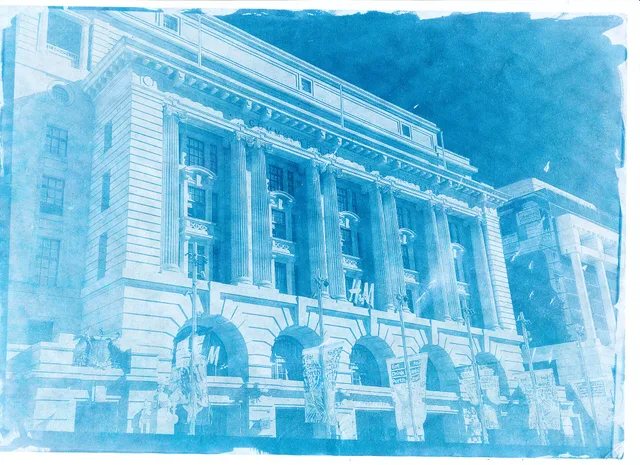
Historical images are a third route, and they need care rather than money. The National Archives publishes research guidance for its Still Picture Branch, describing its research room and the finding aids around its holdings, which is the kind of resource to read before assuming an old photograph is free to use.
Do not buy these
| Item | Why not |
|---|---|
| Spray applicator | Turns coating into a spray operation, with its own ventilation and ignition rules |
| Large UV bank | Overkill until you print regularly and to a deadline |
| Buffered conservation board | Bleaches the image it is meant to protect |
| Metal-ferrule brushes | The ferrule reacts and stains the coating |
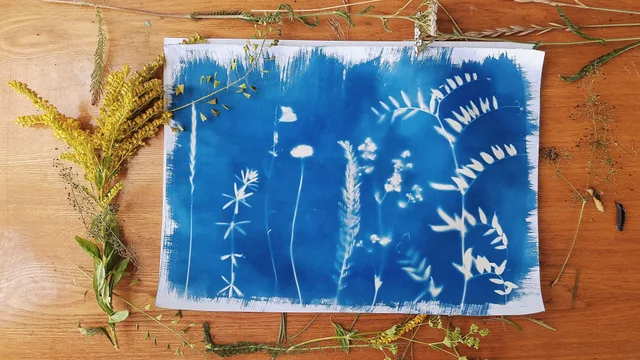
Our account of how the process works explains why paper and light matter more than any of the equipment above.
Buy one paper, not four, in the first order. Learning what a single sheet does across a range of exposures teaches more than comparing four papers before you can hold exposure steady.