Industry
Part of The cyanotype process: chemistry and safety rules
What to look for in a cyanotype process class
Use this cyanotype process class checklist to verify chemistry, safety data, wastewater rules, handouts, reference prints, and course format before booking.
What to take away
- A good cyanotype process class gives you a written formula source and current safety data sheets (SDSs) for ferric ammonium citrate and potassium ferricyanide—not just a verbal recipe.
- Ask for the studio’s written waste-water route and which local sewer authority’s rules it follows.
- Ask which paper, sensitizer product, and negative-making materials the class uses, and what the fee includes.
- Handouts are not automatically free to copy, and a well-run course knows that.
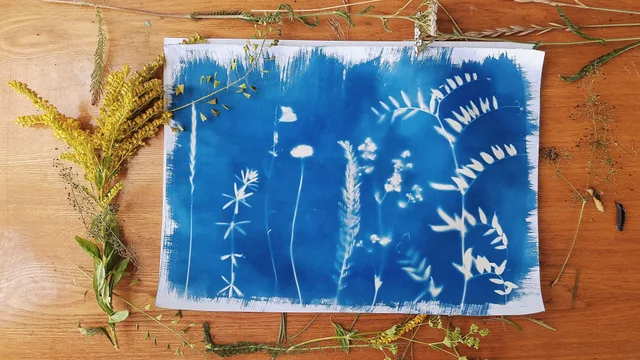
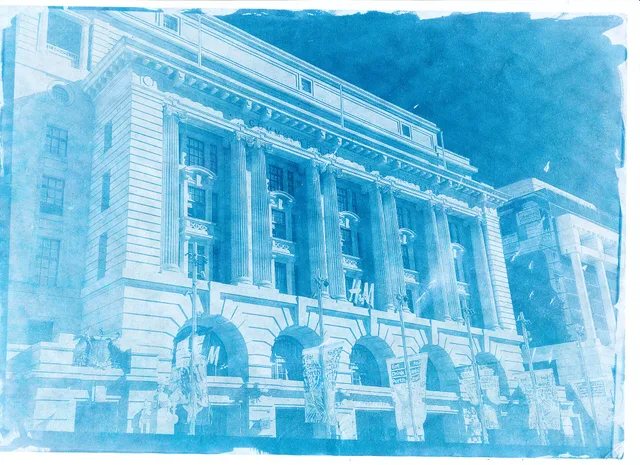
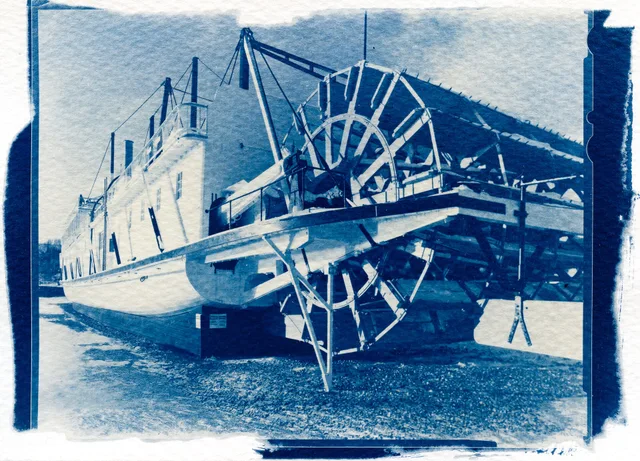
- Go and look at original historic prints. Reproductions cannot show you what a real cyanotype looks like.
What a competent cyanotype class provides
The subject is chemistry, so the standard is higher than for a relief printing workshop. Before booking, ask what the session includes.
What a competent class provides
- Written chemistry with data sheet
- Gloves and sealed eye protection
- Demonstrated wash routine
- Test strips taught as a step
- Paper named, buffering explained
A tutor who says the amounts by memory and hands out a photocopied sheet with no source is teaching folklore. That matters more here than in most crafts, because the failure modes include both a ruined print and a genuinely bad chemical decision.
Questions that reveal how a studio is run
Ask where spent sensitizer goes, whether trays are dedicated by process, whether there is running water at the bench, and what the induction covers. The Clean Water Act’s pretreatment framework governs certain discharges, but it does not give every studio a blanket permission to send wash water down the drain. Ask the studio to identify its local sewer authority and confirm whether its wastewater is collected as chemical waste or permitted to enter the sanitary sewer under local rules; do not accept a vague answer.
Questions that reveal studio practice
- Where does spent sensitizer go?
- Are trays dedicated by process?
- Is there running water at the bench?
- What does the induction cover?
- What does the studio not allow?
For alternative processes specifically, ask which ones the studio runs. A shop that offers gum bichromate or carbon printing needs extraction and a hygiene regime; a shop that offers cyanotype and nothing else may be perfectly well set up with far less.
Handouts, copies and what a course may give you
For a cyanotype class, ask which handouts the tutor wrote or has permission to distribute, and where to find the original publications they cite. The U.S. Copyright Office’s circular on reproduction of copyrighted works by educators and librarians discusses educational copying and notes that the Office cannot give legal advice or opinions on what is permitted.
The practical signal is small but telling. A course that cites its sources and points you at the original publication is being careful in a way that usually shows up elsewhere in its teaching.
Go and see original prints
Reproductions flatten a cyanotype. The blue, the paper surface and the way the image sits in the fibers do not survive photography or a screen.
The National Archives holds a very large body of photographs and graphic works, searchable through its catalog and consultable in a research room by appointment. For cyanotype-specific reference, search the New York Public Library catalog for Anna Atkins’s Photographs of British Algae and confirm access before visiting. An afternoon with original prints does more for your judgment than a month of tutorials.
Getting value from a class
Before booking, confirm the class length, group size, and whether it is a single workshop or a series. Ask whether coating happens in a low-light area and exposure at a daylight or UV station, which paper and chemistry are supplied, whether you make or bring negatives, and what the fee includes. Our account of how the process works covers the variables worth asking a tutor about, and our piece on how independent makers build a cyanotype practice covers what to do with the skill afterward.
Ask for the exact paper and product names rather than a general description. Examples to ask about include Arches Aquarelle paper, Jacquard Cyanotype Sensitizer Set, and Pictorico Premium OHP Transparency Film for digital negatives; the tutor should explain which materials the class actually uses and how negatives are made.
Book the class you can follow up. A tutor who will answer one email afterward is worth more than a well-known name teaching a room of thirty, because the questions that matter arrive a week later at your own bench.
Common questions
Is a one-day workshop enough?
Should the class supply paper?
Ask which formula the tutor teaches and which published source supports it. Get the exact sensitizer product and the current SDS; a manufacturer’s SDS explains product hazards and handling, but is not a substitute for a cited formula source.
Are online courses useful? For negatives and workflow, yes. For handling and wash technique, watching someone in a room is much better.