Reviews
Part of An honest review of printmaking supplies
Scales versus timers: printmaking measuring tools compared
Scales and timers compared for printmaking: which named models suit first-time buyers, what each measures, and where the money is best spent.
What to take away
- Scales versus timers is the basic comparison in printmaking measuring tools. A scale resolves mass; a timer resolves duration. Cyanotype, Vandyke and gum need both, and a kitchen timer is the weak half.
- Ohaus, MyWeigh and AWS cover the scale side from about the price of a brayer upward. Named models include the Ohaus Compass CX-221, AWS-100 and MyWeigh KD-8000. Gralab and Time-O-Lite cover the darkroom timer side with the Gralab 300 and Time-O-Lite GR-72.
- Weigh sensitizers and dichromate by mass, never by spoon. Volume scoops of powder vary batch to batch.
- Dedicate every measuring item to the studio. Nothing returns to the kitchen.
- Label decanted bottles with material, hazard and mix date. Unlabeled means disposed, not guessed.
- Calibrate the scale with a check weight once a year and after any move. Scales drift quietly, and a doubted reading gets ignored anyway.
- A degree or two of temperature accuracy is fine for most printmaking. A process with a narrow development window needs a fast digital probe, not a dial.
Scales, timers and probes compared by price and job
Scales, timers and probes compared
Named option
- Fine scale
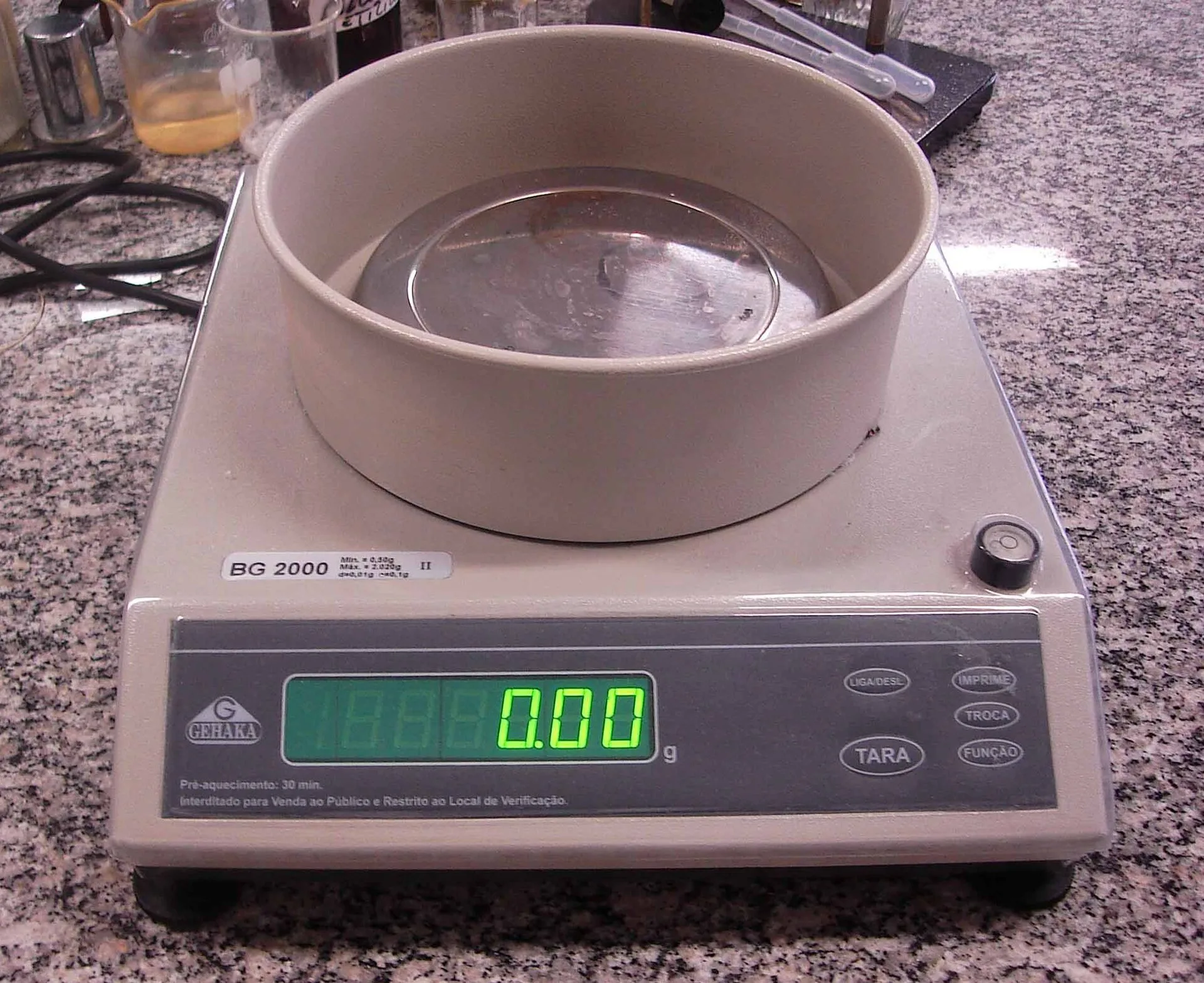
- Ohaus Compass CX-221
- Budget scale
- AWS-100
- Bulk scale
- MyWeigh KD-8000
- Darkroom timer
- Gralab 300
- Digital timer
- Time-O-Lite GR-72
- Thermometer
- ThermoPro TP19
- Graduated cylinder
- Nalgene PMP graduated cylinder
- Hygrometer
- ThermoPro TP50
What it does
- Fine scale
- 0.1 g resolution, 220 g capacity, AC power or battery; typically $120 to $170 as of 2026
- Budget scale
- 0.01 g resolution, 100 g capacity, hinged cover; typically $10 to $25
- Bulk scale
- 1 g resolution, 8 kg capacity; typically $60 to $100
- Darkroom timer
- Motor-driven dial, seconds to minutes, audible; typically $150 to $250 new
- Digital timer
- Two independent channels; typically $200 to $350
- Thermometer
- Fast digital probe, about 3 seconds, waterproof; typically $25 to $35
- Graduated cylinder
- 100 mL or 250 mL, chemical-resistant plastic; typically $15 to $30
- Hygrometer
- Digital temperature and humidity, min/max memory; typically $10 to $20
Suits
- Fine scale
- Sensitizer and dichromate weighing
- Budget scale
- Small batches, tight benches
- Bulk scale
- Gum, sizing, paper batches
- Darkroom timer
- Exposure and wash timing
- Digital timer
- Coating and wash running at once
- Thermometer
- Developer and wash temperature
- Graduated cylinder
- Measuring water and stock solutions
- Hygrometer
- Paper and plate storage
On price, a fine scale costs about what a brayer costs. A darkroom timer usually costs more than a budget scale and less than a second fine scale. On function, scales compare by resolution and capacity. Timers compare by channel count, dial versus digital control, and behavior during a power cut.
Printmaking measuring tools by job
Scale
- Named option
- Ohaus Compass CX-221
- Measures
- Weight to 0.1 g
- Typical price
- $120 to $170
- Best job
- Sensitizer weighing
- Suits
- Fine chemical mixes
Timer
- Named option
- Gralab 300
- Measures
- Seconds to minutes
- Typical price
- $150 to $250
- Best job
- Exposure and wash
- Suits
- Darkroom workflow
Probe
- Named option
- ThermoPro TP19
- Measures
- Temperature in 3 s
- Typical price
- $25 to $35
- Best job
- Developer temperature
- Suits
- Wash and developer
A second scale with coarser resolution and more capacity earns its place once you mix in quantity. It never replaces the fine one.
Recommended starter kit: the AWS-100 for mass and the Gralab 300 for time, typically $160 to $275 for both.
Why a scale beats a scoop for sensitizers
A sensitizer weighed by eye is a different sensitizer each time. The print differences get blamed on exposure or paper. Powder settles in the jar, so a level teaspoon of dichromate in March is not the teaspoon you measured in November.
Record every sensitizer mix
- Weigh powder on a 0.1 g scale
- Note water temperature
- Write the date
- Record the printed result
- Keep the notebook with the scale
The principle comes from conservation research. The National Archives runs a heritage science branch whose scientists study how materials age and evaluate products used for storage and exhibition, rather than trusting accumulated impressions. A home studio version costs a scale and a notebook.
Record every mix: weights, water temperature, date, result. Three written mixes beat thirty remembered ones.
Where timers earn their place
Cyanotype clears in running water on a clock, not a feeling. Winter tap water in a cold studio slows the clearing you timed in July.
Gralab's dial timer survives chemistry spills and power cuts. The Time-O-Lite runs two processes at once when you coat one sheet while another washes.
Set the timer before you pour, not after. A timer started late records nothing.
Small measuring items worth adding
- A wide-mouth funnel that fits your storage bottles.
- Disposable pipettes for small additions.
- A graduated cylinder for water and stock solutions, if you mix in quantity.
None cost much, and all are ruined by sharing with food preparation. Buy duplicates rather than borrowing.
Labeling and tagging
A decanted bottle with a marker scrawl is a hazard you created. Federal specifications for accident prevention signs and tags set out how a tag identifies a hazardous condition and what wording it carries. The idea transfers: say what the material is, what the hazard is, what to do about it.
Print labels rather than write them, including mix date and the safety data sheet reference. Disposal rules and ventilation practice vary by state and municipality; confirm with your state environmental agency or the EPA and the manufacturer's SDS. Readers in Canada should check the equivalent provincial ministry instead.
Our guide to choosing the materials the room is built from covers containers and containment, and our supply cost overview explains why these tools are the cheapest part of any chemical process.
Replace a measuring tool the moment you stop trusting it. A scale that reads differently twice in a row has already cost more in confusing results than a replacement costs to buy.
Common questions
Do I need both a scale and a timer?
For cyanotype, Vandyke and gum, yes. The scale measures sensitizer mass. The timer measures clearing, coating and wash duration.
Is a kitchen scale accurate enough?
For bulk sizing and paper work, yes. For sensitizers measured in fractions of a gram, no. Once it enters the studio it stays there.
Do I need glass measuring vessels?
Polypropylene is safer and adequate for most work. Glass matters where a material attacks plastic, and then you check the SDS before pouring.