Reviews
Oil vs. Water Stones for Linocut Gouges: Which Cuts Better at Home?
Oil vs water stones linocut gouges compared for US home carvers: Norton India, water stones and hard Arkansas, with ranges and humid-climate storage.
What to take away
- A Norton India combination oil stone, about $30 to $45, is the lower-risk first purchase for a home linocut bench.
- Water stones from 1000 to 6000 grit cut faster and finish keener, at roughly $35 to $90 by brand.
- Humidity decides more than grit does. A damp water stone left in a Seattle garage will stain and grow mold.
- Add a diamond flattening plate, $25 to $60, on the same order whichever family you pick.
A dull linocut gouge announces itself through your hand before your eye. The cut skids, you press harder, and the block surface begins to bruise.
What is being compared
Two families of abrasive, not two brands. Oil stones are aluminum oxide or novaculite, charged with a thin film of light oil. Water stones are softer bonded abrasives, soaked before use. The comparison of oil and water stones turns on binder hardness and on how each stone clears swarf.
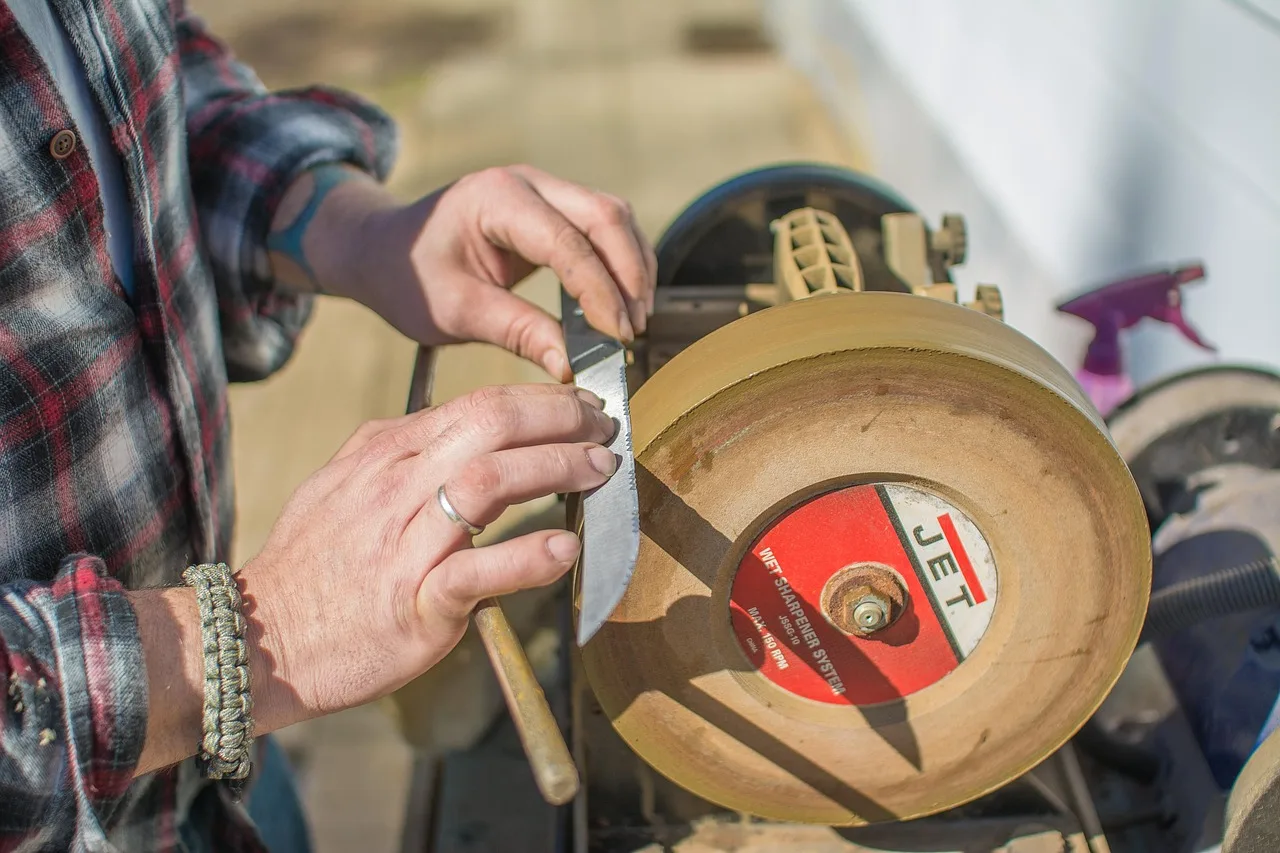
Gouges add a wrinkle that knives do not have. A gouge is honed on the outside bevel only, and the inside face stays untouched. Pfeil, Flexcut and Japanese-style tools all sharpen this way, yet a 1 mm u-gouge is harder to hold steady than a wide chisel.
The criteria that matter
Oil stone (India, Arkansas)
- Typical US price
- $30 to $60
- Prep before use
- wipe on light oil
- Cutting speed
- moderate
- Edge finish
- good to very fine
- Humid air
- unchanged
- Dishes flat
- slowly
- Cleanup
- oil film, needs soap
- Best for
- occasional sharpening
Water stone (1000 to 6000)
- Typical US price
- $35 to $90
- Prep before use
- soak 5 to 15 minutes
- Cutting speed
- fast
- Edge finish
- very fine
- Humid air
- stays damp, can stain
- Dishes flat
- quickly
- Cleanup
- grey slurry, needs a rinse
- Best for
- frequent carving
Prices are illustrative US street prices for 2025, before shipping. Two rows decide the purchase: how the stone behaves in humid air and how often you sharpen. If a past sharpening routine has already failed, printmaking mistakes worth avoiding is the shorter read.
Option by option
Norton India combination. About $30 to $45 for the 8 inch IB8, coarse on one face, fine on the other. No soaking and no slurry. Its oil stone relatives in novaculite behave the same way.
Hard Arkansas. $35 to $60 for a 6 inch bench or slip stone. It cuts slowly and polishes finely, which makes it a second stone rather than a first one.
Water stones. A King 1000/6000 sits near $35, a Norton water stone closer to $70 to $90, and Shapton ceramic above that. Soft binders cut fast and dish fast, and a water stone left wet in a humid room is where the family fails.
Diamond plate. $25 to $60 for 300 to 600 grit. It flattens the others and rescues a chipped edge.
- Prepare the stonewipe oil on the India, or soak the water stone until bubbles stop.
- Lay the bevel flat and lift the handle until the bevel seats on the surface.
- Work the edge in slow figure eights, 20 to 30 passes, holding the angle steady.
- Repeat on the finer grit, then strop on leather or MDF for 10 passes.
- Wipe the tool dry, dry the stone, and store the water stone away from the bench.
Buying order matters as much as grit. The fitting out a printmaking workspace guide sets out what to own before the first gouge arrives.
Where each one wins
Oil stone wins if you sharpen every few weeks, work in a cold garage, or live somewhere humid. A stone that never needs soaking gets used.
Arkansas wins as a finisher for a carver who already owns a coarse plate, since it polishes a V tool without rounding the point.
Water stone wins for daily carving and for small V tools and u-gouges, where a bright edge shows in the print. Faster cutting means fewer passes and less chance of rolling a bevel.
Diamond plate wins for everyone eventually, as a flattener and for repair work. It also resets a bevel that a stone cannot reach.
Either way, damp stones and damp tools belong in the same printmaking materials storage guide as the rest of your kit.
What none of them solve
Every stone here maintains a bevel that already exists. A chipped tip, a rounded edge or a wrong factory angle only gets polished, never corrected. Coarse grinding on a 300 grit plate comes first, and a honing guide that holds a fixed angle comes second.
No stone straightens a bent gouge, and none repairs a loose ferrule. Those are replacement decisions rather than sharpening ones. A gouge ground hollow on a bench grinder will never sit flat again either, however long you hone it.
Wood and linoleum both punish a bad edge, and the cost shows up as ruined blocks rather than ruined tools. The costliest printmaking mistakes spells out what that recovery actually involves.