Reviews
Beginner printing presses: first principles
The four press families a beginner actually chooses between, the five specifications that decide fit, and how to judge guarding on a secondhand machine.
What to take away
- Bed width is the specification you will regret. Everything else can be worked around.
- Presses are old technology. A cast patent date tells you the age of a design, not the quality of a machine.
- Check the pinch points before you check the price. A geared press with an unguarded nip is a hand injury waiting for a distraction.
- The names you will meet most often in the US are Vandercook and Challenge for cylinder proof presses, and Ettan, Conrad, Takach and American French Tool for etching presses.
- Most beginners do not need a press. Buy one when hand burnishing is genuinely limiting your work.
The four families
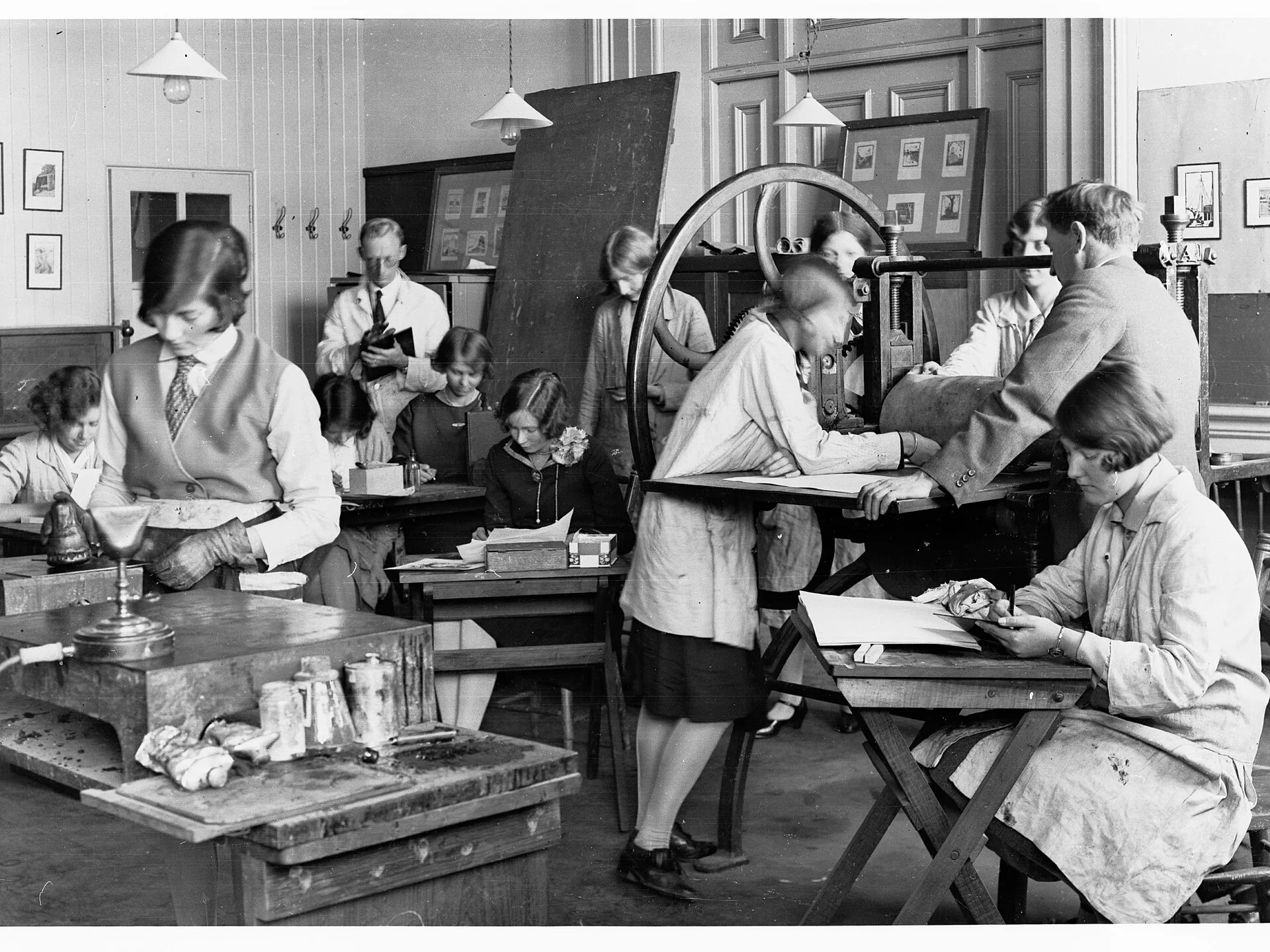
Etching press. A geared top roller pressing a flat steel bed through felt blankets. High pressure, works for intaglio, collagraph, embossing and relief. The heaviest and most expensive family, and the most versatile. The names usually attached to new machines are Ettan, Conrad, Takach and American French Tool, and most beginners meet them secondhand.
Cylinder proof press. A cylinder rolls across a fixed forme at controlled height. Precise, lower pressure, designed for relief and type. Excellent for editions of flat blocks and poor at anything requiring depth. Vandercook and Challenge are the two American names that dominate the used market.
Platen or nipping press. A vertical squeeze between two flat plates. Simple, compact, good for small relief and for flattening. Limited by the plate size and by the force one person can apply. Bookbinders' standing nipping presses are the version you will find most often secondhand.
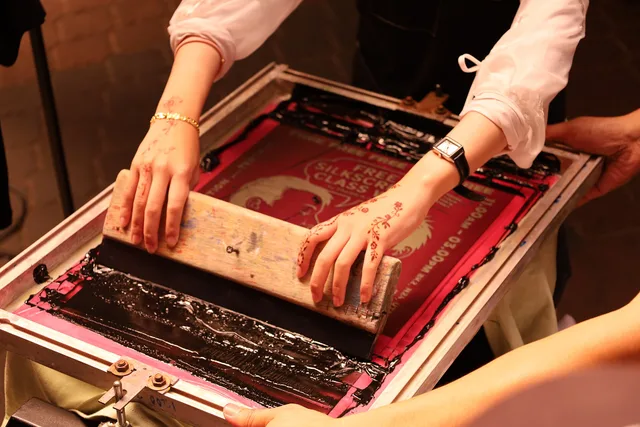
Screen bed. Not a press in the pressure sense, but the same category of purchase: a registration frame with hinge clamps that makes repeatable screen printing possible. Speedball hinge clamps screwed to a plywood bed are the cheap standard.
The five specifications that decide fit
| Specification | Why it matters | Common mistake |
|---|---|---|
| Bed width | Sets the maximum print, permanently | Buying to current work, not future work |
| Roller diameter | Larger rollers need less force | Judging by weight alone |
| Pressure adjustment | Repeatability between sessions | Screws with no scale or reference |
| Bed flatness | Even impression across the sheet | Assuming a used bed is still true |
| Total weight | Whether it reaches the room at all | Measuring the press, not the doorway |
Bed flatness is worth checking with a straight edge and feeler gauge before money changes hands. A dished or pitted bed can sometimes be resurfaced, but the cost of doing so often exceeds what the press is worth.
Guarding and pinch points
A geared press has an ingoing nip between the roller and the bed, and that is the injury that actually happens. In the US the machine-guarding rule is OSHA 29 CFR 1910.212, which requires guarding against hazards such as point of operation, ingoing nip points and rotating parts, with guards fixed to the machine where possible.
Applied to a studio press, that means checking whether the gears are covered, whether the star wheel can trap a sleeve, and whether anything can be reached into while the bed is moving. On a manual press the discipline is simpler: both hands on the wheel, nothing loose on the wrists, and never reach across a moving bed.
Buying used, and reading the castings
Most beginner presses on the market are secondhand, and many are old. Section 101 of the Patent Act (35 U.S.C. § 101) lists a machine among the categories of patentable subject matter, which is why press frames so often carry a cast patent notice. Those patents expired long ago, so the date is useful as a dating tool and as nothing else.
What to inspect instead: gear wear, roller surface condition, bed flatness, bearing play, and whether the pressure screws move freely and equally. In the US most machines change hands through eBay and the Briar Press letterpress classifieds, and the order in which owners run those checks is collected in advice from people who have bought and sold them.
The consumables matter as much as the frame: wool felt blankets, newsprint and card packing, and plate stock in copper or zinc. The materials guide goes through the choices.
Common questions
Do I need a press for relief printing?
What bed width is enough?
Are tabletop etching presses worth it?
Can a press be moved by two people?
In this guide
- What a printmaking press costs to buy, move, site and runA practical breakdown of what a printmaking press costs to buy, move, site and run, with figures for rigging, blankets, servicing, ink, paper and studio time.
- What beginner printing presses need: kit and checksThe core kit for beginner printing presses, from blankets and packing card to feeler gauges, plus the setup checks that keep impressions even.
- Printing press materials: blankets, plates and paper explainedHow to choose materials: choosing blankets, packing, plates and papers for a studio press, plus the lead and solvent hazards that arrive with secondhand letterpress.
- Habits that quietly wreck a beginner printing pressThe habits that damage a studio press or its owner: leaving it under load, adjusting while it moves, and getting used to solvent fumes at the bench.
- Work surfaces compared for a beginner printing press setupChoosing and arranging the surfaces around a press: the stand it sits on, the feed and receive tables, and the clean bench a damp sheet needs.