Guides
Part of Why do printmaking mistakes keep happening, and how do you find the cause?
Do deliberate mistakes really teach printmaking faster than caution?
A weekend plan for learning from printmaking mistakes on purpose: two days of deliberate print faults you can label, plus the boundary around chemistry.
What to take away
- Causing a fault deliberately is the fastest way to learn to recognize it in a real print.
- Do this with ink and paper only. Never run deliberate failure experiments with chemistry.
- Push each variable past the point of failure, not just to the edge of it.
- The output is a labeled reference set, not a stack of prints you would show anyone.
Deliberate mistakes versus caution
Caution is the standard advice for avoiding printmaking mistakes: set the press, mix the ink, and register the block before you pull a print; change one variable at a time; proof the run before you commit it. It is the right method once you are making work to keep.
What caution does not give you is the fault itself. A careful printer who pulls a bad proof learns only that something went wrong, and finding out what means pulling more proofs. In a deliberate fault session you decide in advance which fault you are causing and write it on the sheet as it comes off the press.
That is the criterion for faster: not hours at the bench, but the number of unexplained bad prints you have to make before you can name a fault on sight. Caution gets you there one failure at a time. A weekend of deliberate faults gets you there with a labeled sheet for each one, so by that measure the answer is yes.
Saturday: mechanical and material faults
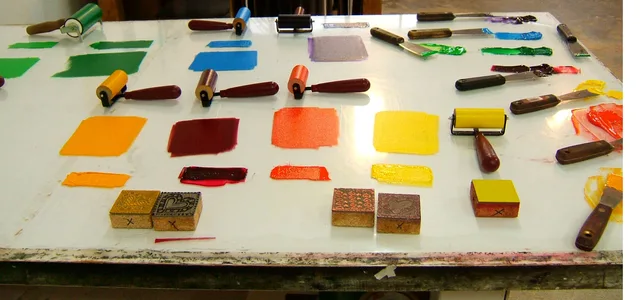
Cut thirty small sheets and carve or borrow one simple block. Then work through the list below, changing one thing at a time and labeling every sheet as it comes off. Keep the kit simple: newsprint for proofing, a brayer, an ink knife, a registration jig, and a loupe for reading the ink film up close. If you are still assembling those, the basic setup for a first home printmaking kit is worth reading before you start.
The faults to cause, by name:
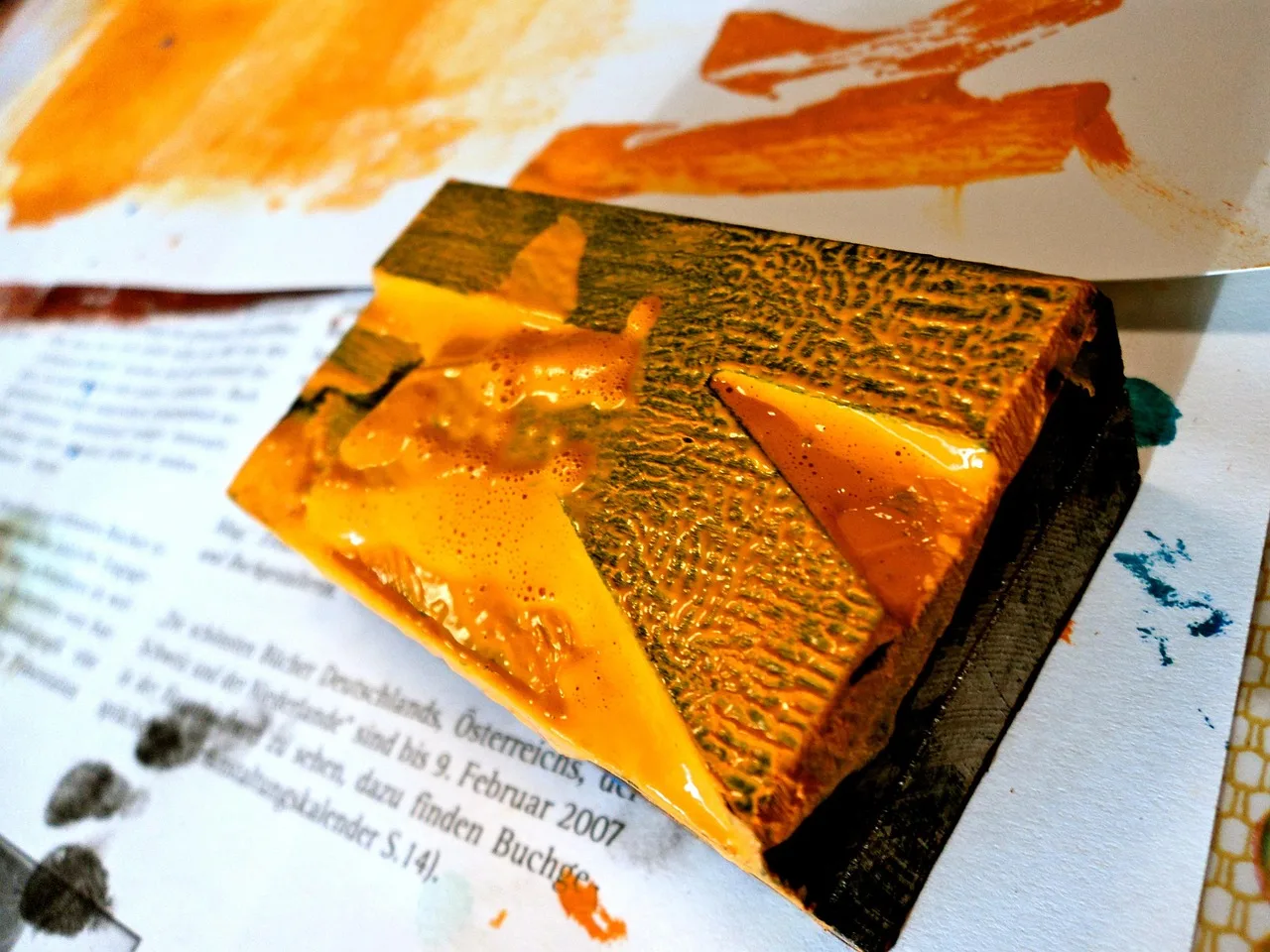
- Ink:too little ink and uneven distribution, which read as starvation and a pale, grainy film; too much ink, which squashes detail, offsets onto the next sheet, and leaves scumming on a plate.
- Pressure:too little, which leaves patchy, weak transfer; too much, which crushes the paper and pushes ink into the margins.
- Blanket and packing:a worn blanket or the wrong packing, which shows as uneven pressure across one sheet.
- Block and registration:a block that slips or rocks under the roller or in the press, and misregistration when a second color goes down.
- Drying:paper that is too dry or too damp, and sheets stacked or handled before the ink has set.
Saturday fault ladder
- Ink filmsix steps thin to thick
- Pressurefive steps light to heavy
- Paperfour papers hard to absorbent
- Blockloose then clamped
- Blockuncleaned between colors
Write the variable and the setting on each sheet in pencil while it is still on the bench. Sheets labeled afterward get mislabeled.
Sunday: procedural and environmental faults
- Print onto a damp sheet, a conditioned sheet and a bone-dry sheet.
- Stack two prints face to face before they are dry, to produce offsetting on purpose.
- Register a second color with no jig, then with a jig, then with a jig you deliberately shift.
- Leave one sheet overnight unweighted and one under board, to see cockling.
By Sunday afternoon the thirty Saturday sheets plus the Sunday tests give you around forty labeled examples, a better fault reference than any published chart because the paper, ink and press are yours. A fault archive only works if each labeled sheet is photographed under the same light and filed the same way.
Sunday fault tests
- Print damp, conditioned, bone-dry sheets
- Stack two wet prints face to face
- Register second colorno jig, jig, shifted jig
- Leave one sheet unweighted overnight, one under board
Push each variable past failure instead of stopping at its edge. A ladder that ends just before the ink fills in tells you where the limit might be.
One that runs two steps beyond it shows exactly what crossing the limit looks like, which you need to recognize later.
Where the exercise stops
Do not run this with chemistry, because deliberately mixing, overexposing or contaminating a sensitizer creates waste you must dispose of.
Unused product discarded from a studio is a different category from a spoiled print. Under the Resource Conservation and Recovery Act (RCRA), the EPA lists discarded commercial chemical products, off-specification species and container residues as their own hazardous waste class at 40 CFR 261.33, exactly what a failed chemical experiment generates.
Learn chemical faults by reading, by asking a tutor, and by running a properly designed single test strip. That is the one part of printmaking where the deliberate failure method is the wrong tool.
Filing the results
Store the labeled sheets flat in a folder by variable, not by day. Keep them somewhere pests cannot reach, because a fault reference set is exactly the kind of stored paper that attracts them.
Follow the National Archives advice on dealing with insects: get accurate identification from an agricultural extension service or an entomologist.
Avoid fumigation, which can permanently damage records. Seal entry points to address the source of the infestation.
Turning it into a habit
Repeat the ink film ladder whenever you change ink, and the paper panel whenever you change paper. Everything else can stay as a one-time reference.
Our what causes printmaking mistakes and why it happens explains how to name what you produced, and a weekend practice plan for learning home printmaking is the version of this exercise aimed at making finished work rather than references.