Industry
Part of 4 parts of printmaking inks and paper, explained
4 things to weigh up on printmaking inks and paper
Where to learn about printmaking inks and paper: how to judge a materials-focused course, which questions separate a real technical class from a demonstration.
What to take away
- A materials course should send you home with labeled samples, not with a finished print.
- Ask whether the tutor names products. A class that will not name a paper is a demonstration, not a course.
- Learn the label vocabulary. The terms in a hazard statement have statutory definitions.
- Handle originals. Research rooms in public collections will let you, and nothing else substitutes for it.
What separates a materials class from a demonstration
A demonstration shows you a result. A materials class changes what you can judge. The difference shows up in what you take home.
Look for these before booking.
Materials class vs demonstration
- Named products to buy afterward
- Comparison setspapers or ink ratios
- Testing taught as a method
- Written handout with sources
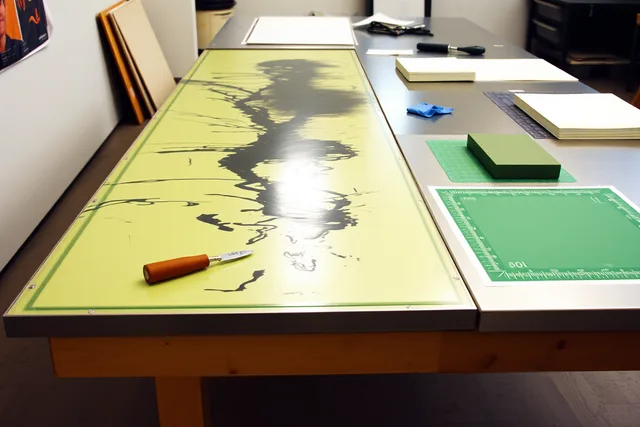
- Bench time making samples
If a course description promises inspiration and mentions no product by name, it is a demonstration. That can still be a good afternoon; it is just not what you booked it for.
Learn the vocabulary the labels use
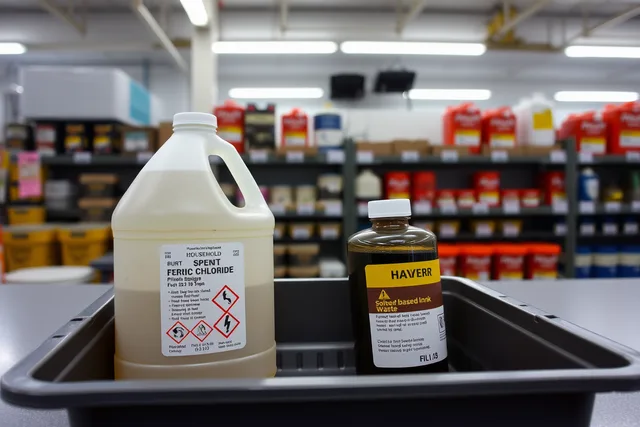
A materials course should spend time on labels. The vocabulary that appears in a hazard statement is not the manufacturer's invention: the underlying statute sets out the definitions used across the hazardous substances rules, covering what counts as a hazardous substance and the terms used to classify one.
Once you know which words are defined and which are marketing, a shelf of art materials becomes readable. A tutor who cannot explain the difference is teaching preference rather than material knowledge.
Handle originals
Photographs and prints do not survive reproduction. Paper surface, ink film, plate mark and tone are all things you have to see in the object.
Public collections make this possible. In the National Archives research room, the Still Picture Branch appraises, processes, preserves and provides access to its holdings and makes original material available to look at by appointment.
Many national, state and university collections work the same way, and study room visits are usually free. A cyanotype class or workshop is judged on safety, documentation and access, much like a study room visit.
Go with a question. Comparing two processes, or looking at how one paper has aged, is far more productive than browsing.
Write the question down before you arrive and take notes in pencil while the object is in front of you. Memory of a paper surface fades within a day, and a note that says the sheet was softer and warmer than expected is worth more later than a photograph taken through glass.
Other routes worth using
Best for
- Paper mill open days
- Fiber, formation, sizing
- Supplier technical lines
- Product-specific answers
- Conservation short courses
- Aging and permanence
- Study room visits
- Real objects
Watch for
- Paper mill open days
- Marketing framed as teaching
- Supplier technical lines
- Sales staff without technical training
- Conservation short courses
- Assumes some prior knowledge
- Study room visits
- Book ahead, always
Our practical bench setup for ink and paper covers the station layout to build once you know what you are working with, and our review framework sets out the specifications a good course will teach you to read.
Keep the samples a course gives you, labeled, in the same folder as your own tests. A comparison set made by somebody who knows the materials is a reference you cannot easily build alone.